Hologram 101: Public, Covert & Forensic Layers
Hologram 101: Public, Covert & Forensic Layers
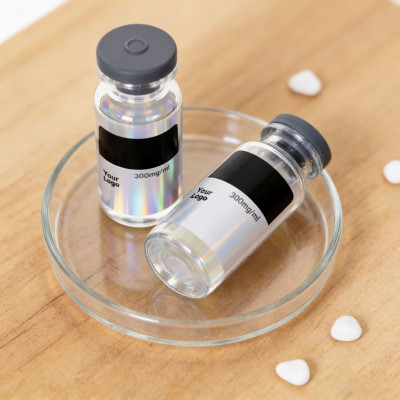
A hologram is often dismissed as a shiny sticker — something added for looks. In security printing it is the opposite: a precisely engineered optical structure with several layers, each visible to a different audience. The public sees the moving rainbow; an inspector sees a hidden mark under filtered light; a laboratory sees features that cannot be reproduced without the original origination. Knowing these three layers is the difference between buying decoration and buying proof.
The Three Layers of a Real Hologram
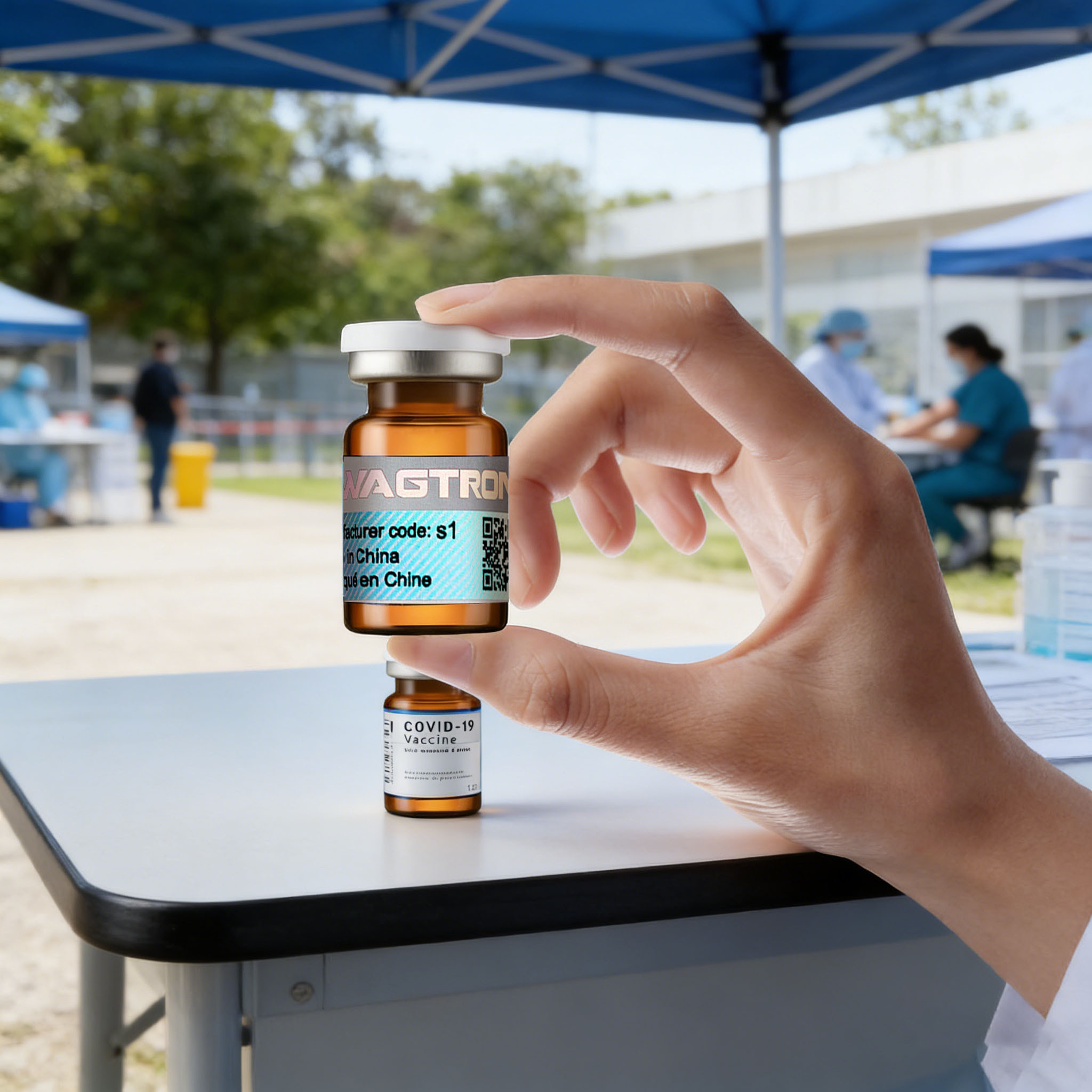
Public layer — what anyone can see
- 2D/3D depth — stacked planes that appear to float and shift as the label rotates.
- 4D / kinetic effects — images that flip, zoom, or change as the viewing angle changes.
- True-color and sharp text — a brand mark and microtext readable without tools.
This layer is the first-line trust cue. It is easy for a consumer to check and hard for a casual copy to match — but on its own it is the easiest layer to fake well, so it should never be the only layer.
Covert layer — what an inspector reveals
- Hidden images — graphics that appear only under a specific laser, UV, or polarizing filter.
- Microtext and nanotext — lines too fine for a commercial printer to reproduce cleanly.
- Dot-matrix or e-beam patterns — deterministic structures that act like a unique optical fingerprint.
This layer moves verification from the public to the trained channel — customs, distributors, and brand inspectors — without changing how the product looks to a shopper.
Forensic layer — what a lab confirms
- Security taggants — invisible chemical or isotopic markers decoded only by a dedicated reader or lab.
- Substrate signatures — film or foil features unique to the origination run.
- Atomic-level features — structures that cannot be cloned without the master tooling.
The forensic layer is the court-of-last-resort proof. It is rarely used day to day, but it settles disputes and prosecutions where the visible and covert layers have been replicated.
Public, Covert, Forensic: A Comparison
| Layer | Who sees it | Tool needed | Main job |
|---|---|---|---|
| Public | Anyone | None | First-line trust, brand mark |
| Covert | Inspectors | Filter / microscope | Channel-level verification |
| Forensic | Laboratory | Specialized reader | Definitive proof |
Add a digital check to the optical ones
A hologram proves the label is genuine; a serialized QR beneath it proves the individual unit is genuine and records the scan. Pairing the two turns a visual trust mark into a queryable record — and the QR can be printed under a VOID seal for tamper evidence too.
Generated from http://www.qsdefender.com/ — point it at your product verification URL in production.
Choosing the Right Hologram
Most brands start with a strong public layer plus one covert feature, then add a forensic marker for high-risk SKUs. Match the layer mix to where counterfeiting actually hurts you. Review our holographic and VOID labels overview and the VOID sticker explainer in the Anti-Counterfeiting Technology line. Send an inquiry or contact us for a sample swatch book, or browse holographic and security labels →
Frequently Asked Questions
Can a hologram be copied?
The public effect can be imitated by a well-funded counterfeiter. That is exactly why the covert and forensic layers exist — they are the parts that cannot be reproduced without the original origination tooling.
Is a hologram enough without a digital layer?
For visual trust, yes. For unit-level verification and analytics, pair it with a serialized QR or NFC tag so each item can be individually checked.
What does "4D" mean on a hologram?
It describes a kinetic effect where the image appears to move, zoom, or transform as the label is tilted — a step beyond static 2D/3D depth that is harder to fake.