Layered Authentication: Why One Feature Is Never Enough
Layered Authentication: Why One Feature Is Never Enough
A single security feature is easy to study, easy to copy, and easy to defeat. Counterfeiters are rational: they target the one thing standing between them and a sale, and they get good at beating it. The brands that stay ahead do not rely on one trick — they stack features so that breaking any one layer still leaves the others intact. That is the whole point of layered authentication: make the cost of a convincing fake higher than the profit it returns.
The Four-Layer Model
Most durable anti-counterfeit programs combine four layers. Each answers a different question, and each is hard to forge for a different reason. Used together, they turn a flat "is this real?" decision into a chain where every link must hold.
Layer 1 — Visible physical
- Holographic foil — 2D/3D and 4D effects that shift with the light and are hard to reproduce without the origination tooling.
- VOID tamper-evident film — leaves a permanent "VOID" mark when lifted, proving the pack was opened.
- Visible security printing — guilloché, color-shifting ink, and microtext a consumer can see at a glance.
Layer 2 — Covert
- Hidden images — marks only visible under a specific wavelength or filter supplied to partners and inspectors.
- Microtext and nanotext — too small to photograph and reprint cleanly.
- Taggants — invisible materials mixed into ink or substrate, read by a dedicated handheld reader.
Layer 3 — Digital verification
- Serialized QR — every unit carries a unique code that resolves to a verification record, not just a brand homepage.
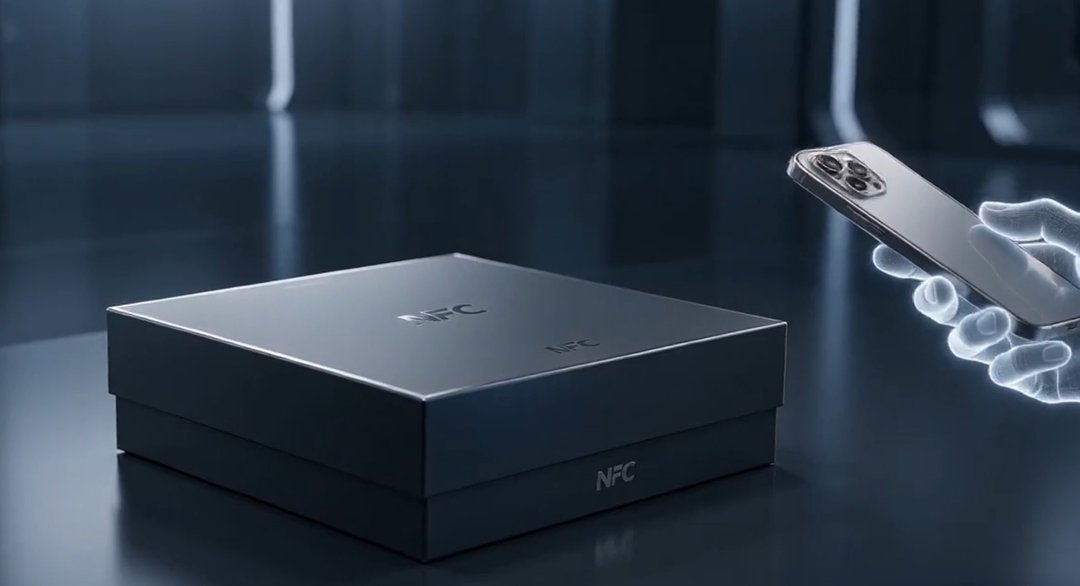
- NFC / RFID — taps return a cryptographic response, useful for high-value goods and B2B flows.
- Dynamic lookup — the same printed code can be checked, geolocated, and flagged if scanned too many times.
Layer 4 — Forensic
- Lab-grade taggants — isotopic or chemical markers confirmed only in a laboratory.
- Substrate fingerprints — paper or film features unique to the production run.
- Chain-of-custody logs — a recorded history that survives even if the physical mark is cloned.
Why Layering Beats a Single Feature
| Approach | Effort to beat | Blind spot | Best paired with |
|---|---|---|---|
| Hologram alone | Medium | Digital clone still scans | Serialized QR |
| Serialized QR alone | Low | No physical proof of sealing | VOID seal |
| VOID seal alone | Low | Does not prove authenticity | Hologram + QR |
| All four layers | Very high | Few | Process + analytics |
Close the loop with a scan
A visible layer proves the pack is sealed and a digital layer proves the unit is genuine — but only if the code resolves to a real record. Start with a serialized QR printed under a VOID seal, then add a holographic mark as the brand-visible layer.
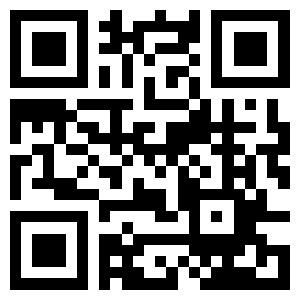
Generated from http://www.qsdefender.com/ — point it at your product verification URL in production.
Where to Start
You do not need all four layers on day one. Most programs begin with a visible seal plus a serialized code, then add covert and forensic layers as volume and risk grow. See our serialized QR guide and the holographic and VOID labels overview, or explore the full Anti-Counterfeiting Technology line. Send an inquiry or contact us for a layered sample kit, or browse anti-counterfeit labels and tags →
Frequently Asked Questions
Is a serialized QR enough on its own?
It proves authenticity and enables analytics, but it does not prove the pack was unopened. Pair it with a VOID seal for physical tamper evidence.
Do small brands need four layers?
No. Start with two layers that match your risk: a visible seal and a serialized code. Add covert and forensic layers as counterfeit pressure rises.
Will more layers slow down packaging?
Not if they are designed into the label. A combined holographic, VOID, and QR construction applies in one pass, so the line speed stays the same.