QSDEFENDER Advances Traceability Trust Node With Third-Party Testing Collaboration
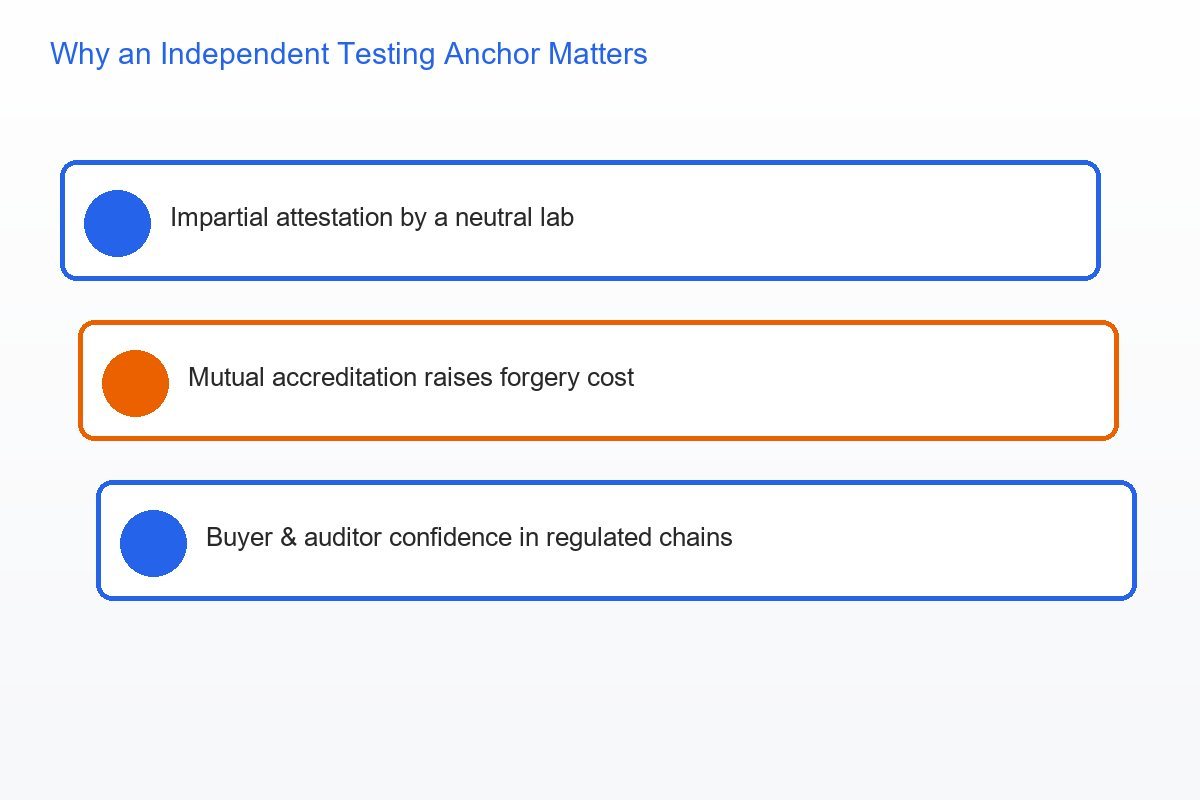
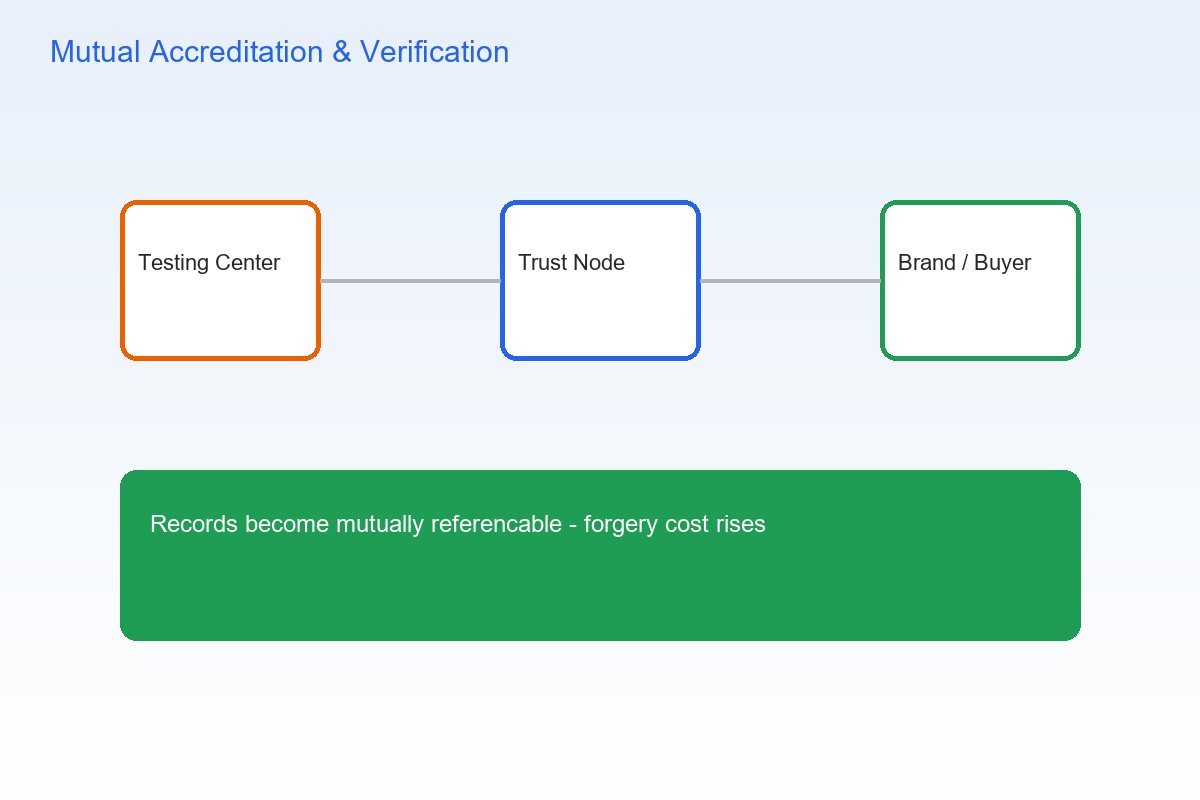
QSDEFENDER Newsroom · Published 2026-10-03 · Source: company announcement (progress update) QSDEFENDER is advancing a collaboration with an independent third-party testing center to build a shared traceability trust node — an impartial verification layer where a product's authenticity and test records can be cross-checked against a neutral laboratory, so the anti-counterfeit claim is attested by someone other than the maker. The initiative is part of the company's broader move to add independent, mutually-accreditable evidence to its anti-counterfeit and serialization stack for regulated brands. Why it matters: a self-asserted "genuine" label is weaker than one an independent lab has examined. Pairing an impartial test attestation with a signed serial and a tamper-evident seal makes forgery far more expensive than simply reprinting a sticker. In categories where trust is the product — pharmaceuticals, spirits, cosmetics, automotive parts — buyers and auditors increasingly expect proof that comes from outside the brand itself. An independent third-party testing center provides that outside anchor: The node is a verification layer that binds an impartial test result to the same identity carried on the physical pack. Four capabilities make it work: Laboratory results are matched to the unit's signed serial, so a test certificate points to one specific, genuine pack. Physical samples are tested and recorded, giving an evidentiary trail behind the authenticity claim. The test certificate is anchored to the same identity as the pack's security feature, so the two cannot be split. A buyer, regulator, or auditor can confirm the attestation through a verification endpoint in seconds. The trust node does not replace the core technologies — it adds an independent evidence layer on top of them. For a pharmaceutical pack, the serialized code and tamper-evident seal already bind identity to the genuine unit; the testing attestation makes that identity checkable against an outside authority. For wine and spirits, the same logic reinforces the brand-protection playbook of unique identity, tamper seal, and consumer verification. What we build: the serialized identity and tamper-evident seal are produced and registered on our own controlled line, and the trust node adds an independent, mutually-accreditable attestation on top — so the claim holds up to an outside audit, not just to our own word. This announcement is a progress update. The collaboration with the independent third-party testing center is being established: scope, mutual-accreditation paperwork, and the live verification node are in progress. We will publish the formal milestone once the node is operational and the accreditation is in place. No claim here should be read as a concluded, signed commercial agreement. No. The node confirms that an attestation exists and is valid for a given unit; the underlying raw test data stays within the accredited laboratory and the brand's controlled records, shared only on a need-to-know basis. Internal QA verifies that we made the product and the security feature correctly. The third-party node adds an external check — an independent lab confirming the claim, which is the evidence auditors and buyers trust most. It is being stood up now as a progress initiative. We will confirm the live date and the accreditation scope in a follow-up announcement once the node passes validation. Adding an independent third-party testing anchor to a signed-serial plus tamper-seal foundation turns a self-reported authenticity claim into one a neutral authority can confirm. For regulated brands, that outside attestation is increasingly the difference between a claim buyers accept and one they audit away. The full series lives in the Anti-Counterfeiting Technology hub, and our team can scope an attestation-ready stack for your category. Interested in the trust node or a testing partnership? Tell us your category, markets, and the evidence your buyers require, and we will outline how an independent attestation layer can sit on top of your current anti-counterfeit stack. Contact our partnership team.QSDEFENDER Advances a Traceability Trust Node With an Independent Third-Party Testing Collaboration
Why an Independent Testing Anchor Strengthens Authentication

What the Traceability Trust Node Does
1. Cross-verification
2. Sample attestation
3. Tamper + crypto anchor
4. Public verify path
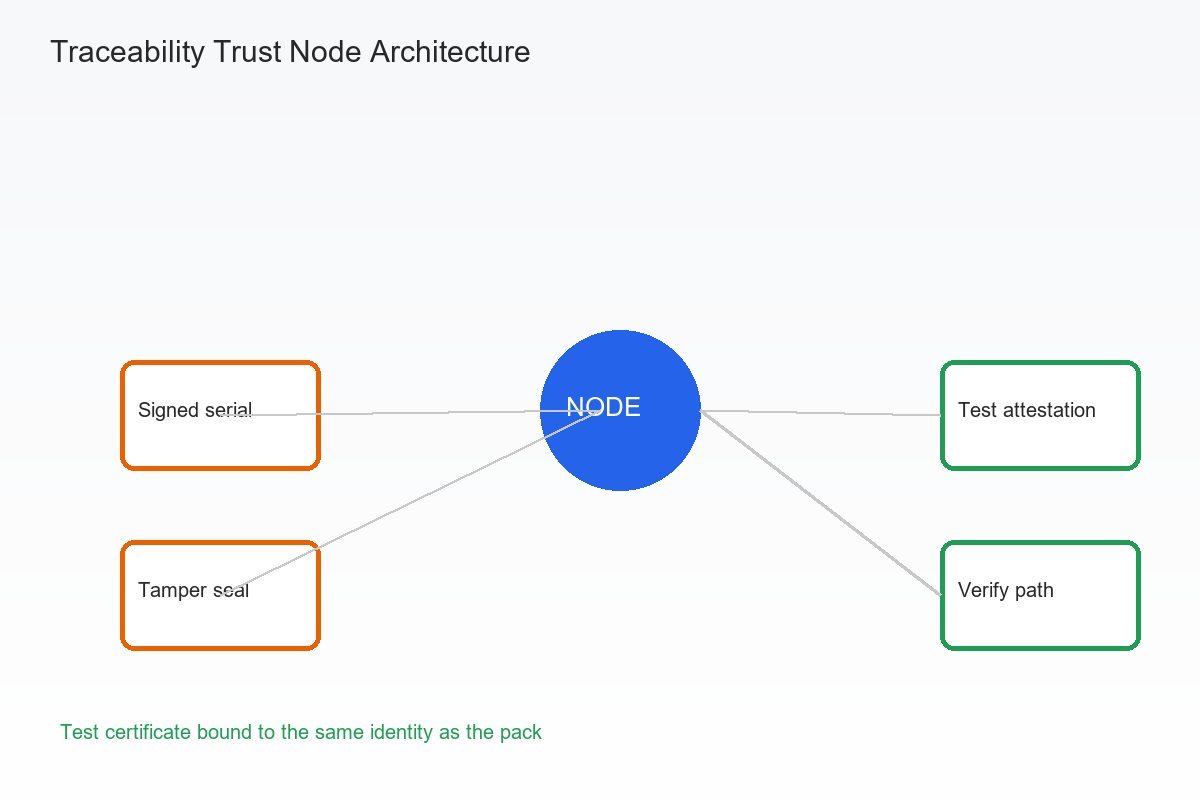
How It Connects to the Anti-Counterfeit Stack
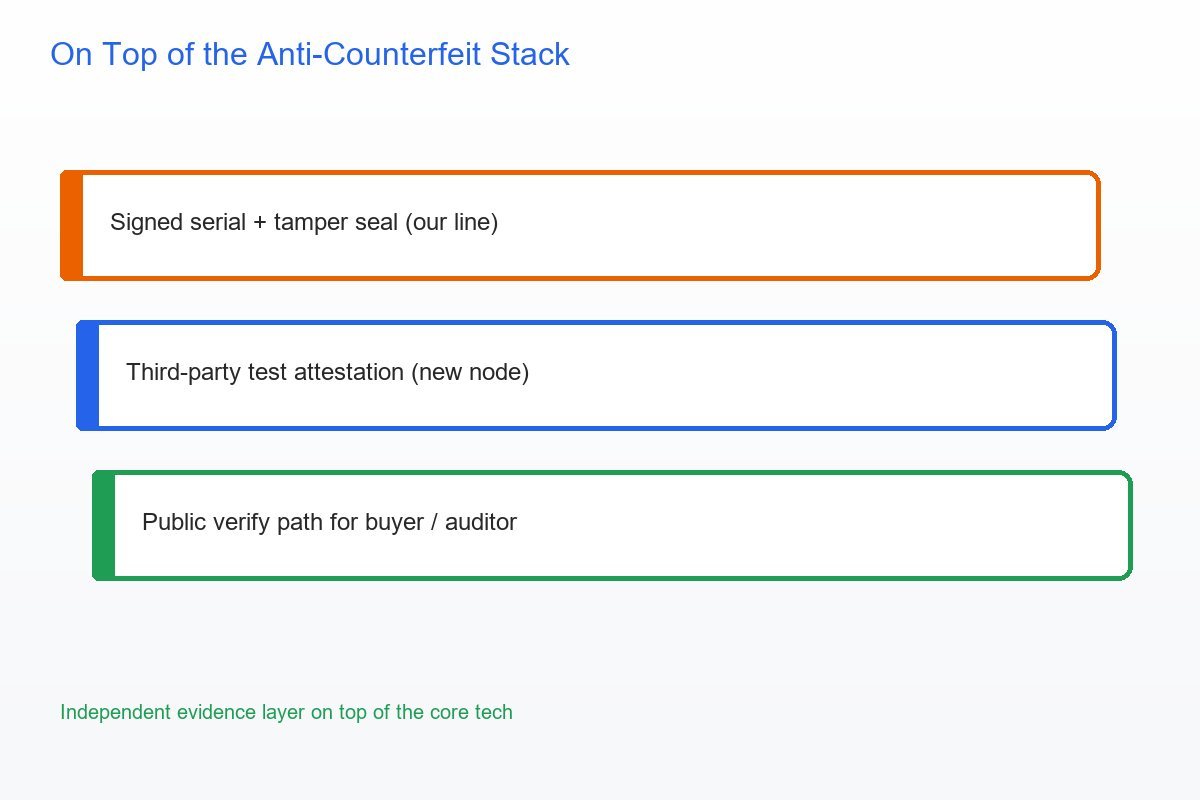
Status: A Progress Update

Frequently Asked Questions
Will my product's test data be made public?
How is this different from QSDEFENDER's own quality control?
When does the trust node go live?
Putting It Together