Dynamic vs Static QR Codes for Brand Protection
Ask a printer for a QR code and you'll get a static one: a fixed URL, identical on every unit, pointing at your homepage forever. Ask a brand-protection engineer and you'll get something entirely different — a dynamic QR code, unique on every item, resolved and judged by a server at the moment of scanning. The two symbols look exactly the same to a consumer's camera. What separates them is whether the system behind the code can tell your genuine product from a counterfeit wearing a copy of your label. This article breaks down the difference with a comparison you can take to your next sourcing meeting, explains why static codes actively help counterfeiters, and covers the ownership question that decides who really controls your authentication program.
The dynamic-vs-static decision in three lines:
- Static = one code for the whole batch. Copy it once and counterfeiters get authentic-looking codes for free.
- Dynamic = one unique code per item, verified server-side on every scan — the server, not the sticker, issues the verdict.
- Before signing with any platform, confirm three things: codes resolve on your domain, ownership is contractually registered, and you can export your scan data.
Static vs Dynamic: What the Words Actually Mean
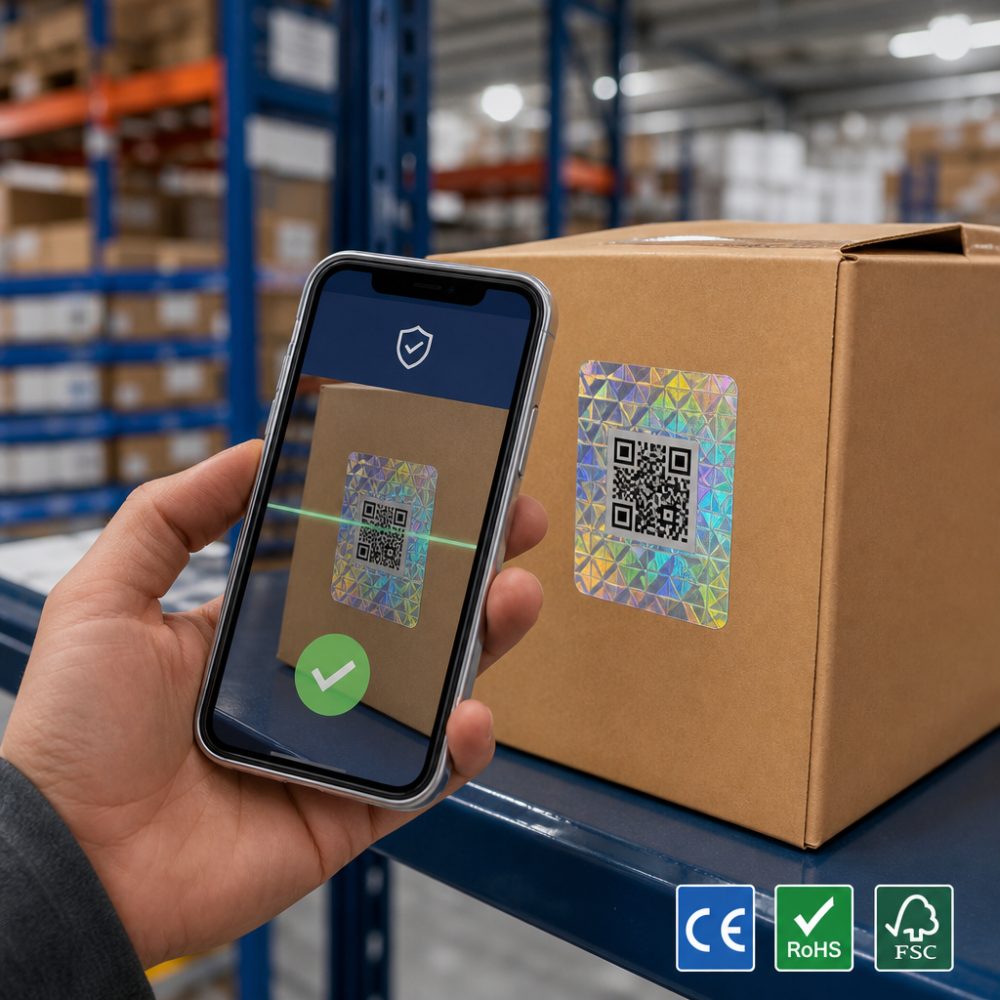
The distinction has nothing to do with how the code is printed and everything to do with what happens after the scan:
- Static QR code. The URL is baked into the pattern. Every unit of every batch carries the same destination — usually a marketing page. Anyone who scans once knows what all units point to, forever. There is no per-item identity to check, so there is nothing to authenticate.
- Dynamic QR code. Each code carries a unique, encrypted or randomized identifier. The scanner lands on a verification endpoint that looks up that identifier in real time and returns a verdict: genuine, already scanned, revoked, or unknown. The code is a key; the server is the judge.
For the full rollout process — serialization, print control, verification backend, and pilot structure — see our 2026 QR anti-counterfeit implementation playbook. And if you're still deciding whether QR is the right layer at all, the QR vs NFC vs hologram comparison maps each technology to the threat it actually stops.
| Capability | Static QR | Dynamic QR (serialized + server-verified) |
|---|---|---|
| Per-unit identity | None — one code for the batch | Unique code on every unit |
| Who issues the verdict | Nobody — the code just opens a page | The verification server, per scan |
| Cloning resistance | Zero — one copy counterfeits the batch | Copies fail verification or trip anomaly alerts |
| Scan analytics | Aggregate page visits only | Per-item: time, coarse location, device, verdict |
| Kill switch | Impossible — URL is fixed | Revoke or flag any single code instantly |
| Gray-market visibility | Invisible | First-scan-in-wrong-country alerts |
| Incremental cost per unit | ~$0.000–0.001 (code generation only) | ~$0.001–0.01 (variable data + platform) |
Cost ranges are 2026 open-market benchmarks for variable-data QR label programs, compiled by the QSDEFENDER engineering team in September 2026 from public supplier quotations; they exclude fixed setup fees and vary with volume, substrate, and finish.
Why a Static QR Code Can't Protect Your Brand
One copy counterfeits the whole batch
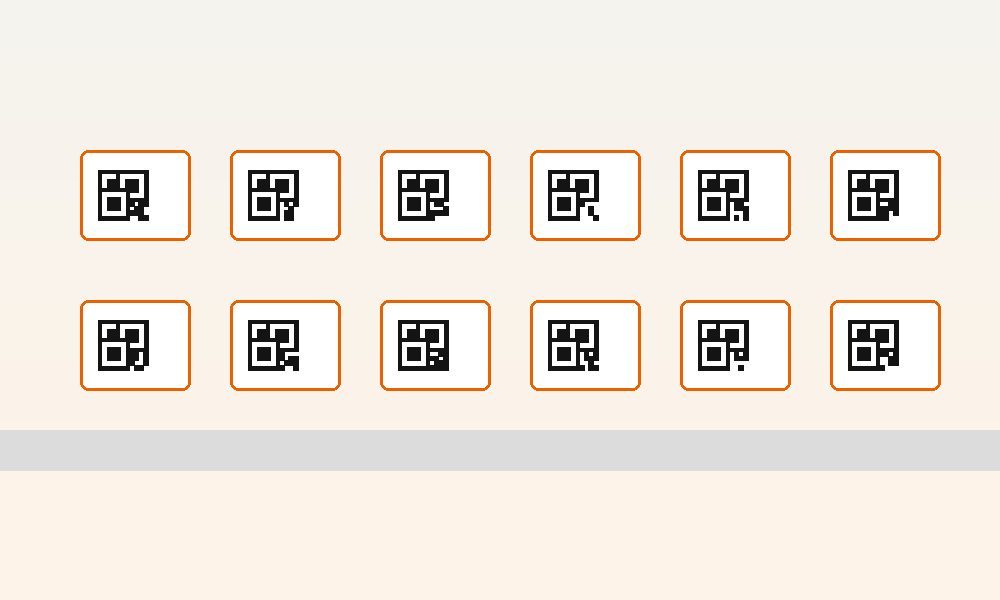
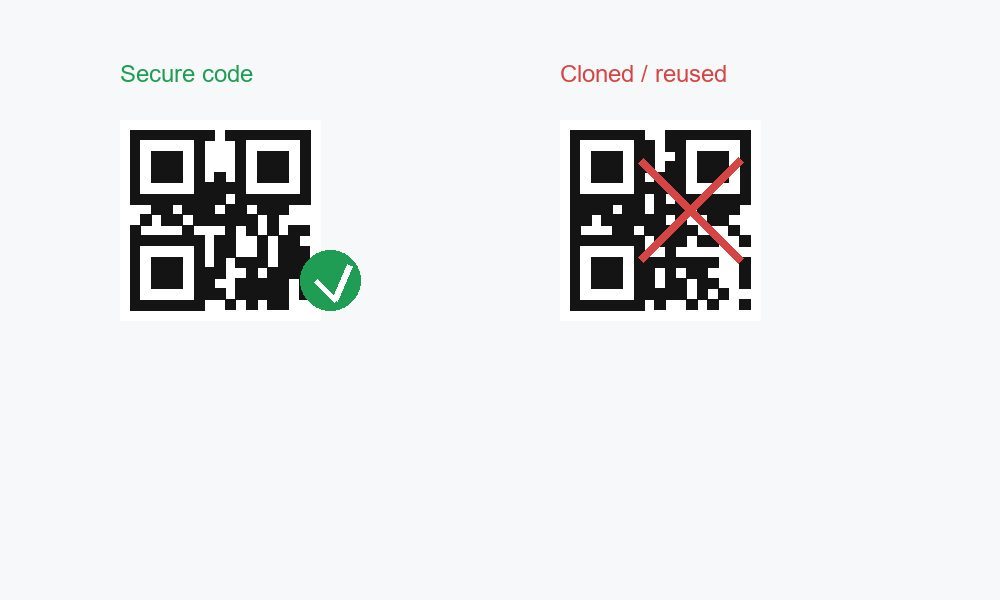
A static code is, by construction, a public constant. A counterfeiter buys one genuine unit, scans it, and reproduces the identical pattern on a million fakes. Every fake then behaves exactly like the real thing when scanned — because there is nothing to distinguish them. The very property that makes static codes convenient for printing (one artwork file, unlimited copies) is the property that makes them worthless for authentication.
No verdict authority
Even if a counterfeiter never copies your code, a static QR still can't answer the only question a suspicious buyer is asking: is this specific unit genuine? It points to a page that exists independently of any scan. A marketing landing page says nothing about the item in the customer's hand — so the code performs brand theater, not brand protection.
You're flying blind
Static codes produce no scan-level data. You cannot see where your products are being verified, when a batch lands in an unauthorized territory, or whether a single code is being hammered by a counterfeit operation testing copies. That blindness is precisely what dynamic qr code authentication was designed to fix.
How Dynamic QR Code Authentication Works
A working dynamic system is a four-link chain — the same chain we deploy on QSDEFENDER coding lines:
- 1. Unique code per unit. Variable-data printing assigns every label a distinct identifier — no two units share a code, and codes are never recycled between batches.
- 2. Server-side resolution. The scan hits a verification endpoint owned by the brand. The endpoint resolves the identifier against the issuance database in real time.
- 3. Verdict + logging. The consumer sees Verified Genuine (or a clear warning), and the platform records the event: timestamp, coarse location, device class, first-or-repeat scan.
- 4. Anomaly alerting. Impossible patterns — a code scanned hundreds of times across regions no logistics route can explain — raise alerts so the brand can respond while the counterfeit run is still in circulation.
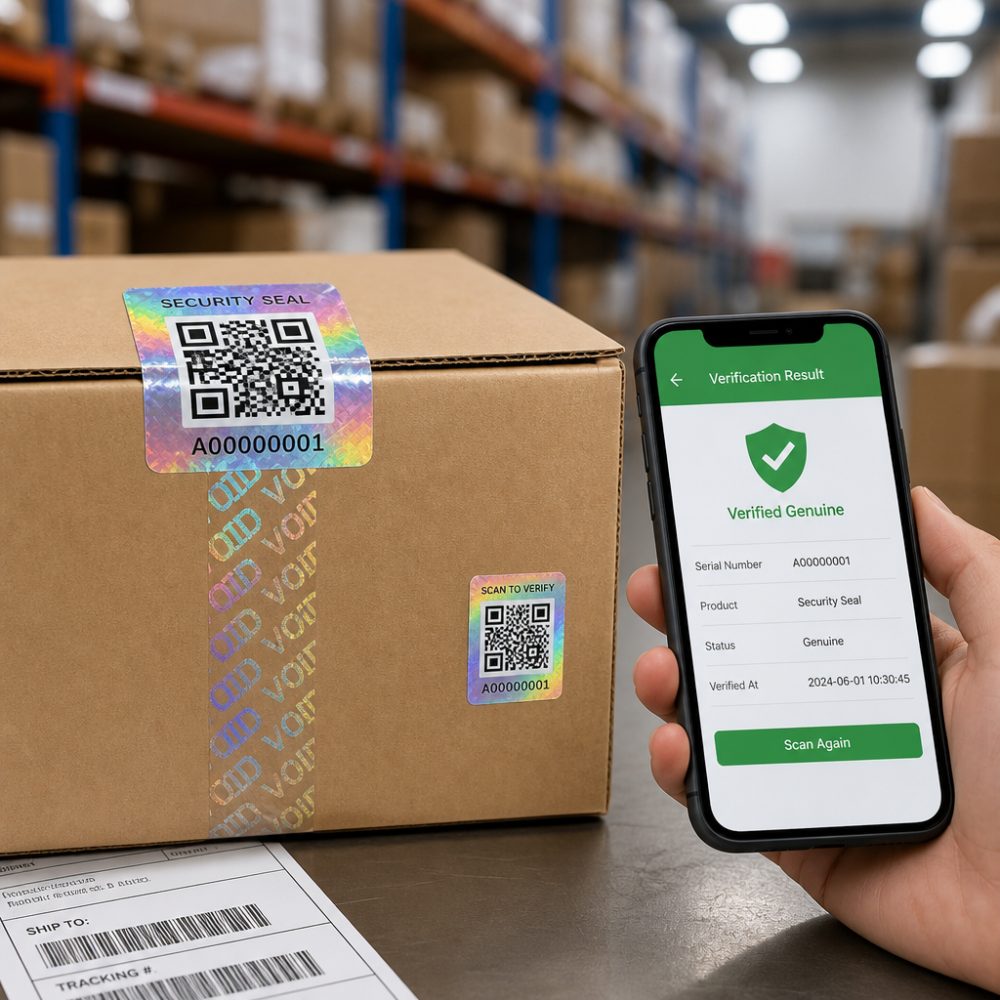
The critical design decision is step 2: the verdict must come from a server the brand controls, not from whatever page the code happens to open. That's also what separates real dynamic authentication from "dynamic QR generators" marketed for marketing campaigns — those let you edit the destination URL, which is convenient for promotions and irrelevant for security. A destination you can edit, a counterfeiter can also point their fakes at.
The Ownership Question Nobody Asks Until It's Too Late
Industry audits of failed QR authentication programs (a failure mode documented across implementation guides from Pageloot and Code2Scan) converge on one root cause: the brand never owned the infrastructure. Three questions to put in writing before you sign with any platform:
- What domain do the codes resolve to? If every label points to verify.some-vendor.com/xyz123, the vendor — not you — controls the verification experience. If the relationship ends, every label in the field becomes a dead link, and your authentication story collapses mid-campaign.
- Is code ownership registered? The issuance database — which codes map to which products, batches, and territories — is your evidence chain for enforcement actions and customs cases. Contractually confirm it is yours, documented, and exportable.
- Can you take your data with you? Scan logs are operational intelligence and, in disputes, legal evidence. Lock-in that holds your history hostage is a bargaining position against you.
QSDEFENDER programs resolve on the brand's own domain by default, with the issuance database and scan logs exportable at any time — we consider that the minimum professional standard, not a premium feature.
What the Platform Records — and Why It Matters
This is the operational half of EEAT that no artwork can show. Every scan against our verification backend writes one event record. Typical fields:
- Identity: which unique code, which product, which batch, which intended territory.
- Context: timestamp, country/city-level origin, device class, verdict returned.
- History: first scan vs. repeat scans, and scan-velocity per code per region.
From those records, the alerting layer watches for patterns that human eyes miss. Illustrative examples of what triggers an alert (patterns from the monitoring capability itself, not client metrics): a code whose first scan occurs in a country that never received the batch; a single code scanned at velocities no consumer behavior can produce; a cluster of unknown or failed codes appearing in one market within days of each other — the signature of a counterfeit run testing copied labels. Each alert is a lead: which SKU to inspect, which distributor to call, which customs office to notify.
If You've Already Printed Static Codes
Migrating is less painful than it looks, and more urgent than it feels. A phased path that works in practice:
- Keep the static codes working for what they're good at — routing scanners to your site — and add a separate serialized dynamic label (or a secondary panel) to new production.
- Switch new batches to dynamic first on your highest-risk SKUs, not all SKUs at once. One product line is enough to validate print, scan UX, and alerting.
- Let old stock run out naturally. Authentication coverage follows production date, and the two systems coexist without consumer confusion because the scan experience is identical.
When a Static Code Is Still the Right Answer
To be honest about the boundary: static codes remain perfectly fine for marketing routing, warranty registration, and batch-level recall communication. If your goal is traffic and convenience — not item-level authentication — a static QR is cheaper and simpler, and there is no security downside because you never claimed protection in the first place. The failure is not choosing static; it's calling it anti-counterfeiting.
Not sure whether your current codes are protecting you or advertising to counterfeiters? Send us a photo of your label or a sample code. The QSDEFENDER engineering team will review your current QR setup, tell you which of the three ownership risks you're carrying, and propose a dynamic qr code authentication pilot scoped to one SKU and 2–4 weeks.
Related reading in this series
- QR Anti-Counterfeit Codes: 2026 Implementation Playbook — the full six-step rollout, print tolerances, and cost benchmarks.
- QR vs NFC vs Hologram: Which Layer Fits Your Product? — matching each technology to the threat it stops.
- How Unique Serialization Stops Fakes and Builds Trust — the pillar introduction to serialized QR protection.