RFID & NFC Anti-Counterfeiting Labels: B2B Buyer's Guide
Most RFID and NFC label projects do not fail at the technology — they fail at the purchase order. A buyer picks a chip from a datasheet, a converter picks an adhesive nobody tested, and six months later the tags read fine in the lab and miss in the field. This guide is the checklist we wish every brand owner carried into an rfid anti counterfeiting labels procurement conversation: how to choose the frequency band, the chip, the security layers, the construction, and the vendor — in that order.
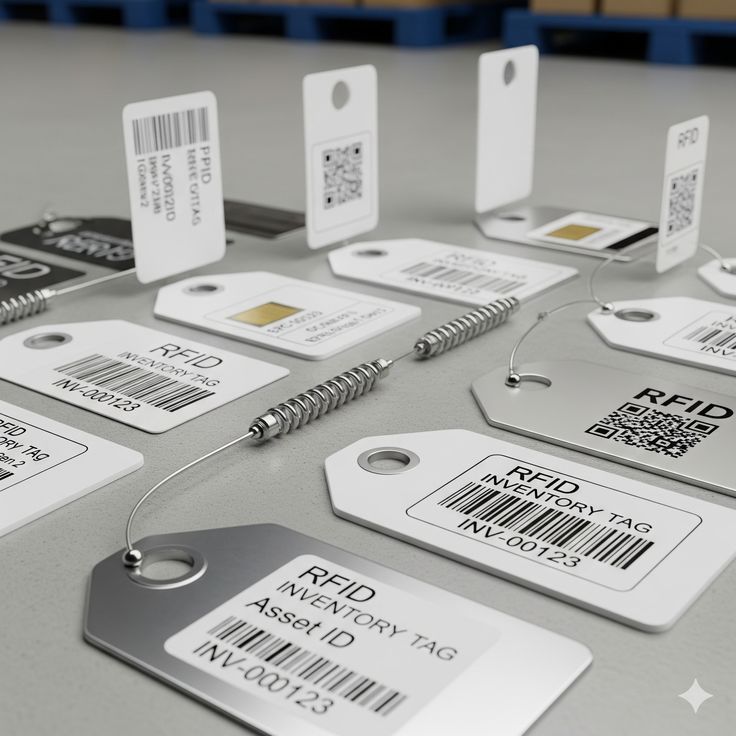
One technology, many form factors: UHF hang tags, cable seals, metal-mount tags and item-level labels serve different parts of the same brand-protection problem.
First, What You Are Actually Buying
An RFID or NFC anti-counterfeiting label is four components in one laminate: a silicon chip that stores the identity and, on secure parts, runs cryptography; a printed antenna tuned to the chip; the inlay that marries the two; and a printed face carrying your brand, variable data, and often a QR code. Two facts drive everything else. First, every genuine chip carries a factory-programmed, unchangeable TID (tag identifier) — a silicon fingerprint that cannot be rewritten by a counterfeiter. Second, the chip is only one layer of security; a cloned-looking label can still fool a consumer if the other layers are weak. Both facts shape the buying decisions below.
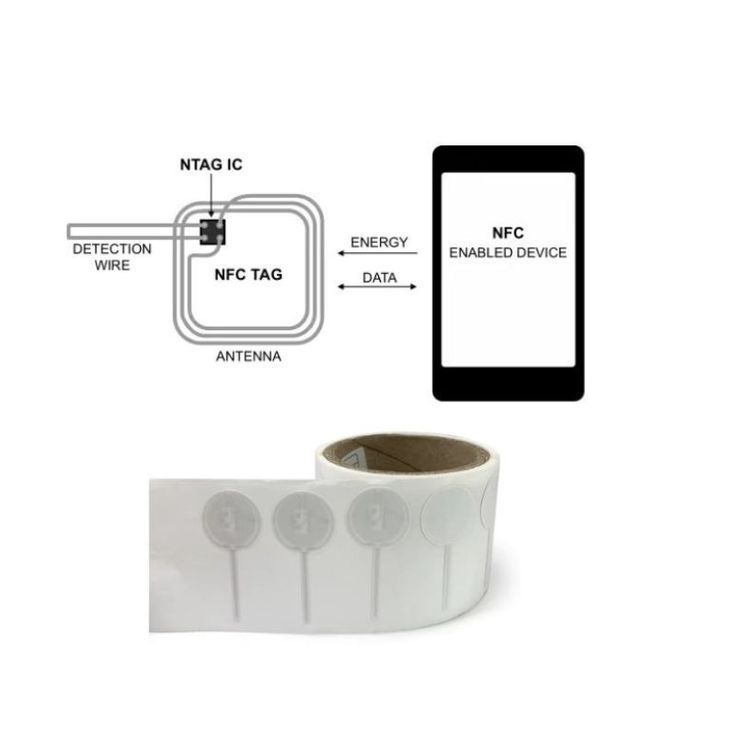
Anatomy of an NFC label: chip plus printed antenna, energized by the phone's field. Tamper-detect variants add a detection wire loop that breaks the circuit when peeled.
Decision 1: Frequency Band — NFC or UHF?
The band is physics, not preference, and it decides everything downstream:
| Band | Frequency | Typical read range | Air-interface standard | Best fit |
|---|---|---|---|---|
| NFC / HF | 13.56 MHz | ~1–5 cm (tap) | ISO/IEC 14443 A (NTAG, DESFire); ISO/IEC 15693 (ICODE) | Consumer tap-to-verify, luxury, wine & spirits, cosmetics, pharma packs |
| UHF (RAIN) | 860–960 MHz | several meters (inlay-dependent) | EPC Gen2v2 / ISO/IEC 18000-63 | Warehouse reads, logistics chokepoints, apparel, gray-market diversion control |
| LF | 125–134 kHz | centimeters | ISO/IEC 11784/11785, ISO 14223 | Animal ID, industrial access — rarely brand protection |
The short version: if the consumer must verify with a phone in hand, NFC wins because every modern smartphone reads it natively. If the brand team needs to read pallets, cartons, or racks without line of sight — or to catch diverted goods at a distribution door — UHF wins. Many serious programs run both: UHF for the supply chain, NFC on the sellable unit.
Decision 2: The Chip — Match Security Level to Threat
This is where datasheet-first buying goes wrong. A cheap NFC chip and a cryptographic NFC chip cost different amounts and stop different attacks. On the HF/NFC side:
| Chip | Class | Memory | Security | Indicative unit cost* |
|---|---|---|---|---|
| NTAG 213 / 215 / 216 | NFC Forum Type 2 | 144 / 504 / 888 bytes | 32-bit password only — static data, clonable | $0.03–0.15 |
| MIFARE Ultralight AES | Type 2 with crypto | ~½ of NTAG 216 | AES-128 mutual authentication | between NTAG and DNA tiers |
| NTAG 424 DNA | Type 4 | 256 bytes user | AES-128; SUN/SDM issues a fresh cryptographic URL per tap; CMAC; TagTamper variant adds a peel-detection loop | $0.20–0.50 |
| MIFARE DESFire EV3 | Type 4 (APDU) | 2–32 KB | AES-128 + ECC, multi-application — built for transit/access, not consumer taps | $0.50–2.00 |
*Indicative inlay-level figures from public industry comparisons, verified September 2026; your quoted price depends on antenna, adhesive, volume and processing, so treat them as order-of-magnitude only. The pattern matters more than the digits: NTAG 424 DNA is the industry default for consumer-facing authentication because each tap generates different encrypted data — a counterfeiter who copies one tap's URL copies a dead string. Plain NTAG 21x parts are fine for engagement links and indefensible as a sole anti-counterfeit measure.
On the UHF side, the mainstream brand-protection relevant parts:
| Chip | Standout feature | Why it matters for brand protection |
|---|---|---|
| Impinj M730 | AutoTune adaptive tuning | Consistent reads across mixed SKUs and detuning surfaces without per-product antenna work |
| Impinj M770 / M775 | Protected Mode + integrated crypto | Serialization and authentication workflows on the tag itself |
| NXP UCODE 9 | NXP Brand Identifier, Self-Adjust | Reader can cryptographically confirm a genuine NXP silicon; strong dense-population reads (e.g., garment stacks) |
| NXP UCODE DNA | AES-128 mutual authentication, large user memory | Cryptographic UHF for high-value items needing both range and crypto |
| Alien Higgs-9 | Compact die, large user memory | Small inlays for tight spaces (jewelry, electronics) with item-level data on-tag |
Chip sensitivities in this generation sit roughly between −20 and −24 dBm across vendors, and finished-label read range for standard inlays is commonly quoted in the 7–11 meter class — but the antenna design and the surface it is applied to move real-world range more than the chip name does, as the systematic selection guide on choosing an RFID tag IC makes clear. Always evaluate the finished inlay on your product, not the datasheet.
Decision 3: The Four Security Layers Around the Chip
Cryptographic silicon is the digital layer of a four-layer framework the brand-protection industry uses to structure defense:
- Overt — what a consumer can check: QR code, hologram, color-shift ink, tamper-evident die-cuts.
- Covert — what trained staff or a simple tool reveals: UV inks, microtext, hidden markers.
- Forensic — what a lab confirms: chemical taggants, spectral signatures.
- Digital — what cryptography proves: the chip's TID plus a server-side challenge, sealed with a scan record and, where required, a tamper-evident blockchain-anchored log.
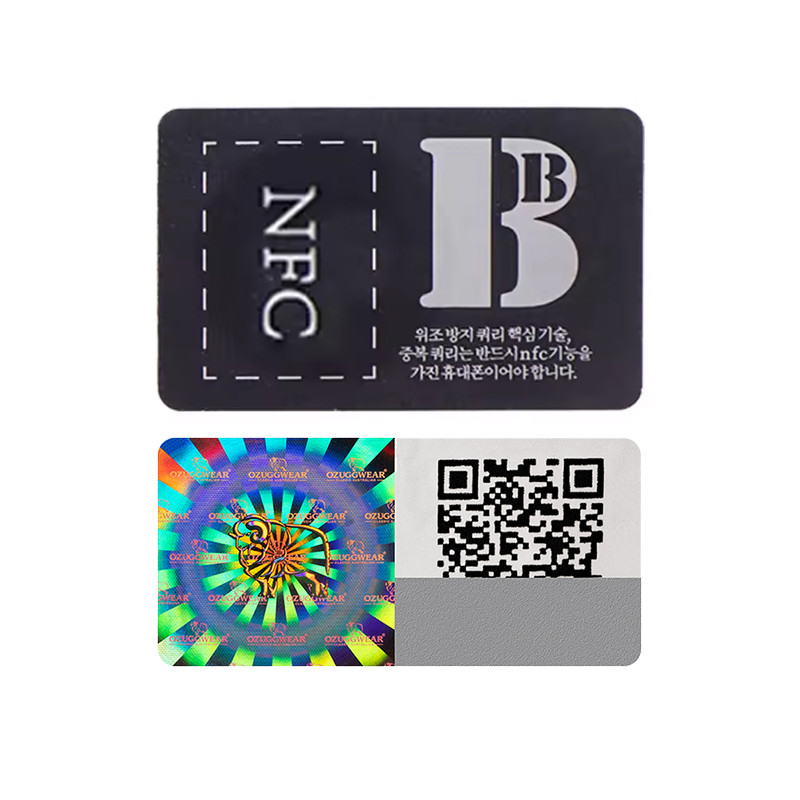
A practical label rarely relies on one layer: NFC silicon for cryptographic proof, a QR fallback for phones without NFC, and a holographic overprint for the five-second human check.
The buying mistake to avoid is paying for a cryptographic chip and then letting a two-cent print job undermine it — or the reverse, buying holograms and shipping a clonable static NFC URL. Specify the layers as a set.
Decision 4: Construction — What the Label Must Survive
The chip does not fail in the field; the construction does. In more failed pilots than we can count, the rfid anti counterfeiting labels themselves were correctly specified and the adhesive, liner or antenna geometry was not. Work through this list with your converter:
- Substrate: metal detunes standard dipole antennas (specify on-metal constructions with a spacer/ground plane); liquids absorb UHF energy (HF is more tolerant, or use wet-environment-tuned UHF geometries).
- Environment: standard inlays tolerate typical ambient ranges; cold chain, autoclave, wash-down or outdoor exposure need rated ICs, adhesives and IP-protected housings.
- Form factor: wet inlay (cheapest), pressure-sensitive label, hang tag, tamper-evident die-cut, or hard tag — each changes cost, durability, and where the antenna can be placed.
- Application process: hand-applied vs. automated applicator changes liner, pitch and label stiffness requirements.
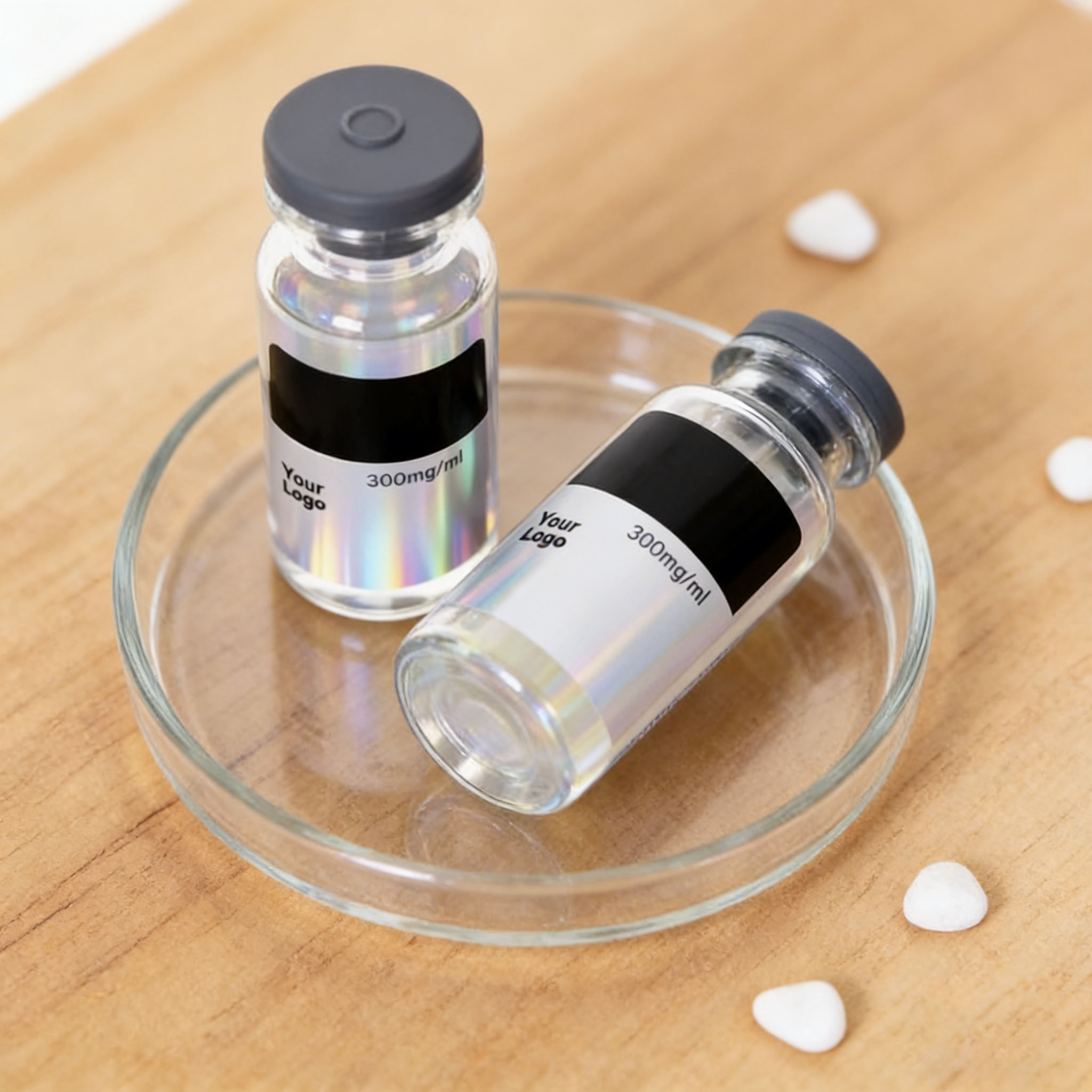
Regulated categories — pharma, spirits, cosmetics — are where RFID/NFC labels combined with holographic and tamper layers are becoming the expected baseline.
Decision 5: Encoding, Keys, and Who Holds Them
An unencrypted write-everything-in-the-plant workflow can undo the chip's security. Put these on the table before the PO:
- Identity model: EPC SGTIN-96 remains the default for UHF supply chains; if consumers scan, GS1 Digital Link URIs are the interoperable route (see our industry statistics piece and the serialization playbook for how identity, verdicts and alerts connect).
- TID strategy: use the factory TID as a fingerprint — it is programmed at silicon level and cannot be rewritten.
- Key custody: for NTAG 424 DNA programs, ask explicitly who generates and holds the SUN keys, how they reach the encoding line, and whether they can be rotated. A vendor who cannot answer this in writing is not running cryptographic programs.
- Encode-and-verify: insist on 100% encode verification with rejection logging, plus a lock/kill policy for rejects.
The Buyer's Checklist — Ten Questions Before You Sign
- Which frequency band does my use case actually require — consumer tap, warehouse read, or both?
- Which chip class matches the threat: static link, password tag, AES/SUN dynamic, or multi-application?
- What is the finished-inlay performance on my product (metal, liquid, curved surface), not on a poster board?
- How are labels personalized and encoded, and where do the cryptographic keys live?
- Is encode verification 100% with logged rejects?
- What print-grading standard applies to the visible layers (e.g., ISO/IEC 15415 for 2D codes)?
- What are the MOQ, tooling/NRE charges, and lead time for the first pilot batch?
- What does the pilot protocol measure — read rate, false-negative rate, tamper response — and on which device matrix?
- What happens to data: scan records, alerting, dashboards, export rights?
- Can the supplier support scale-up without changing the inlay spec mid-program?
A deeper system-level view of how the labels fit a full program lives in our RFID pillars: the RFID label technology analysis and the RFID trust-ecosystem piece; for QR-first programs, start with the 2026 implementation playbook.
Honest Boundaries
Chip memory, security and standard details in the tables above come from vendor datasheets and public industry comparisons (NXP, Impinj, Alien documentation; independent NFC/RFID comparison sites), verified September 2026 — silicon revisions change, so confirm the current datasheet before specifying. Unit costs are indicative order-of-magnitude figures from public comparisons, not quotes. Read range and durability depend on the finished inlay, substrate and environment; no table here predicts field performance. QSDEFENDER manufactures and converts these labels: our capacity, lead times and pricing are quoted per project in writing rather than claimed as universal benchmarks, and we do not publish client-specific performance data.
Get a Quotation and a Pilot Plan
Send us your substrate, environment, annual volume and verification flow, and we will return a chip-and-construction recommendation with a pilot plan — sample labels, test protocol, and written key-management terms. Send an inquiry with the subject "RFID Label Quote" or contact us to start the technical discussion.
Sources: NXP NTAG 424 DNA / NTAG 21x / DESFire EV3 and UCODE product documentation; Impinj M700-series documentation; Alien Higgs-9 documentation; independent NFC/RFID chip comparison resources (nfcfyi.com, rfidfyi.com), verified September 2026. Indicative prices are order-of-magnitude only. This article was drafted with AI assistance and reviewed by our engineering team.