Layered Authentication: Why One Feature Is Never Enough
Direct Answer: One Security Feature Is Rarely Enough
A single anti-counterfeit feature can usually be beaten by a determined counterfeiter. The brands that stay ahead use layered authentication: two or more independent security layers, each defending a different attack path. If one layer is cloned, the others still expose the fake. This guide explains the four-layer model used across the industry and how to combine QR, NFC, holograms, and VOID materials into a stack that is hard to defeat on any single front.
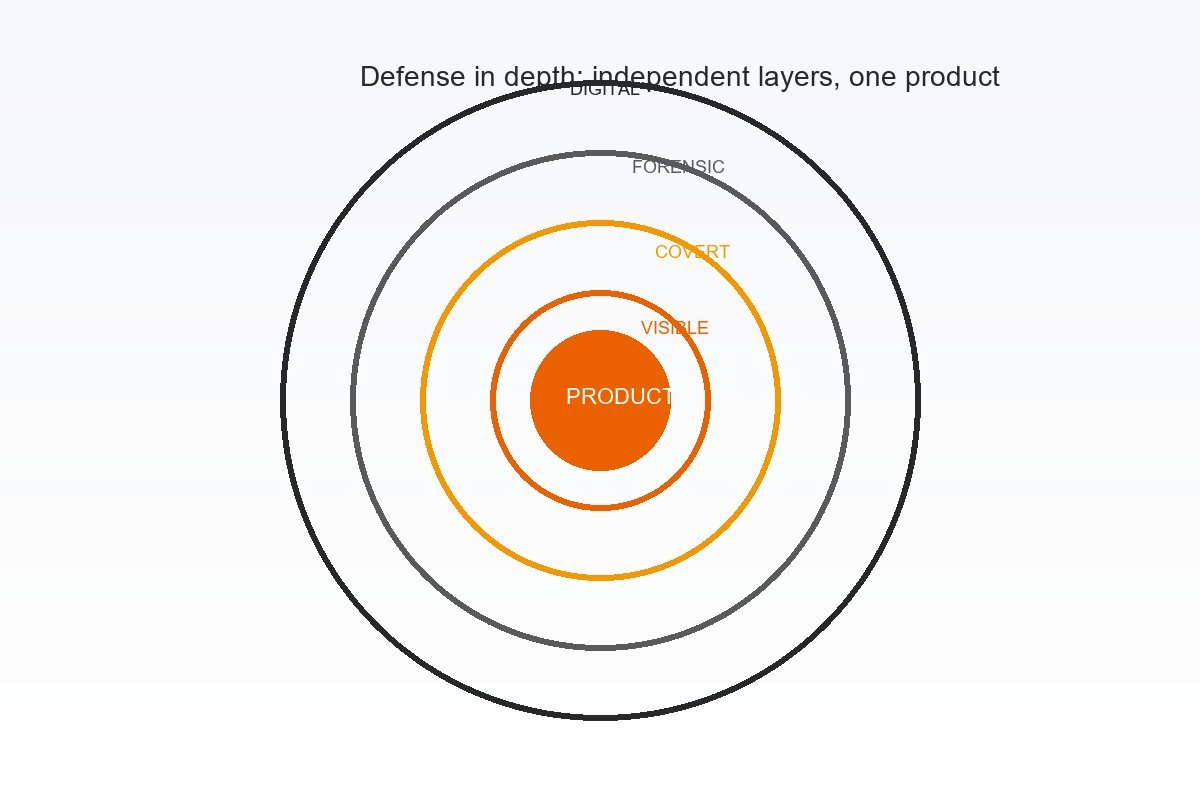
Key takeaway: Defense-in-depth beats any single "best" feature. A visible hologram deters casual fakes; a covert mark defeats replication; a forensic tag traces the leak; a digital code closes the loop with live verification. The layers protect each other.
Why a Single Layer Fails
Counterfeiters are adaptive. When you rely on one feature, they focus all their effort on that one weakness:
- Visible-only (e.g. a hologram sticker): Good at scaring off low-end fakes, but skilled replicators re-print convincing copies. A buyer can't tell the clone from the original by eye.
- QR-only: Easy to print, but a static code just points to a website a counterfeiter can clone. Without a server-side check, the scan proves nothing.
- VOID-only: Excellent tamper evidence, but it proves the seal was opened, not that the product inside is genuine in the first place.
The pattern is the same every time: one layer means one point of failure. Layering removes that single point.
The Four-Layer Authentication Model
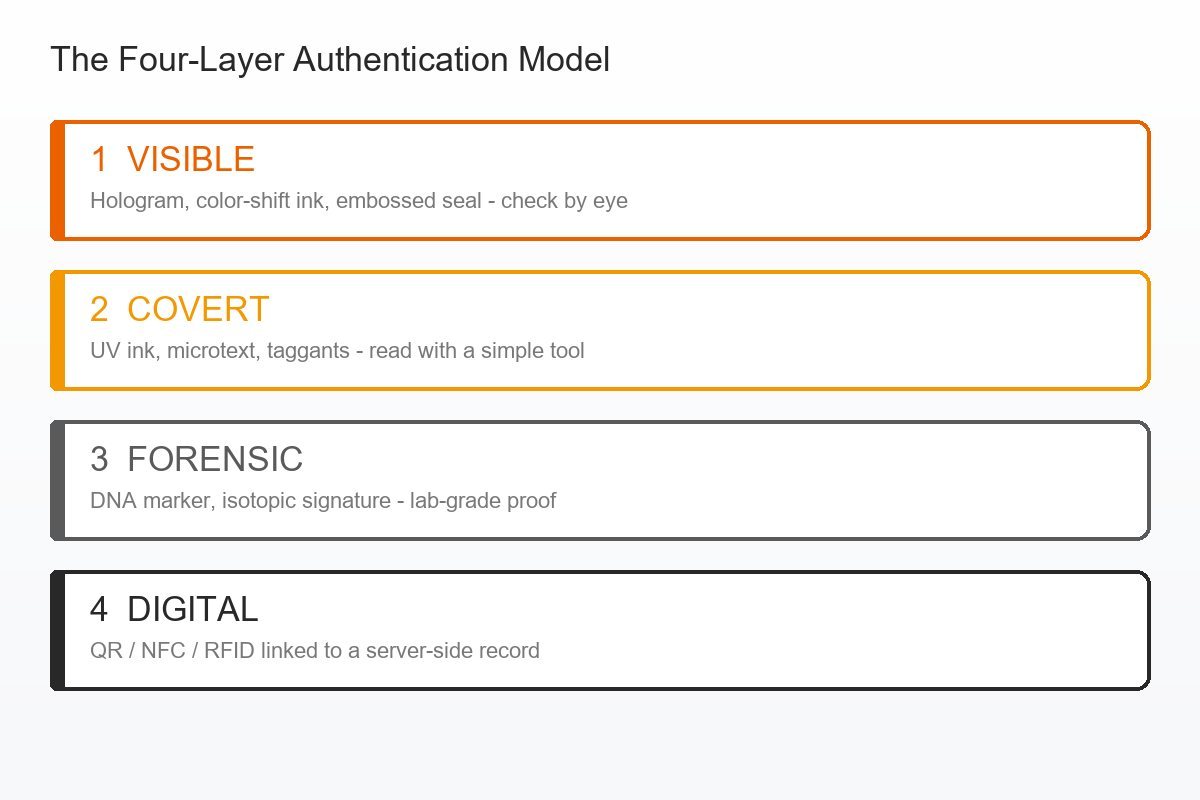
The four-layer framework (public / covert / forensic / digital) is a widely cited structure for product authentication. Each layer targets a different adversary and a different stage of the attack.
Layer 1 — Visible (Public) Authentication
What the buyer or inspector sees and checks by eye: holograms, color-shift inks, guilloché patterns, embossed seals. Purpose: instant, no-tool verification and strong deterrent. Weakness: can be replicated by capable printers. This is your first line, not your only line.
Layer 2 — Covert Authentication
Features hidden from the public but readable with a simple tool or under specific light: microtext, UV ink, hidden images, taggants. Purpose: defeats visual replication, because the clone won't contain what it can't see. Weakness: requires a trained inspector or a low-cost reader.
Layer 3 — Forensic Authentication
Features that survive even sophisticated cloning and require lab analysis to confirm: DNA markers, isotopic signatures, serialised substrate. Purpose: legal-grade proof in disputes and raids. Weakness: slow and costly, so it is the backstop, not the front door.
Layer 4 — Digital Authentication
The connected layer: QR, NFC, or RFID that links the physical item to a server-side record. Purpose: live, scalable verification and data capture (scan location, time, anomalies). Weakness: only as strong as the backend; a static, non-validated code can be copied. Pair it with server-side checks and cryptographic tags such as NTAG 424 DNA.
How the Layers Protect Each Other
The value is not the sum of the layers, it is their interaction. A counterfeiter who clones the hologram (Layer 1) still lacks the covert UV mark (Layer 2). If they somehow copy that too, the server rejects the reused digital code (Layer 4). And if a leaked batch surfaces, the forensic tag (Layer 3) identifies exactly which substrate and shift it came from.
Deters the casual fake
Visible and covert layers make replication expensive before a fake is even shipped.
Catches the clone at scan
Digital layer with server-side validation rejects copied or reused codes in real time.
Proves it in court
Forensic layer supplies evidence-grade identification for enforcement and recalls.
Mapping Your Features to the Four Layers
You do not need every layer for every product, but you should cover at least three. A practical mapping for common QSDEFENDER components:
| Feature | Primary layer | Best paired with |
|---|---|---|
| QR code (dynamic, server-validated) | Digital (Layer 4) | VOID seal + forensic tag |
| NFC / RFID tag (NTAG 424 DNA) | Digital (Layer 4) + Covert (Layer 2) | Hologram for visible trust |
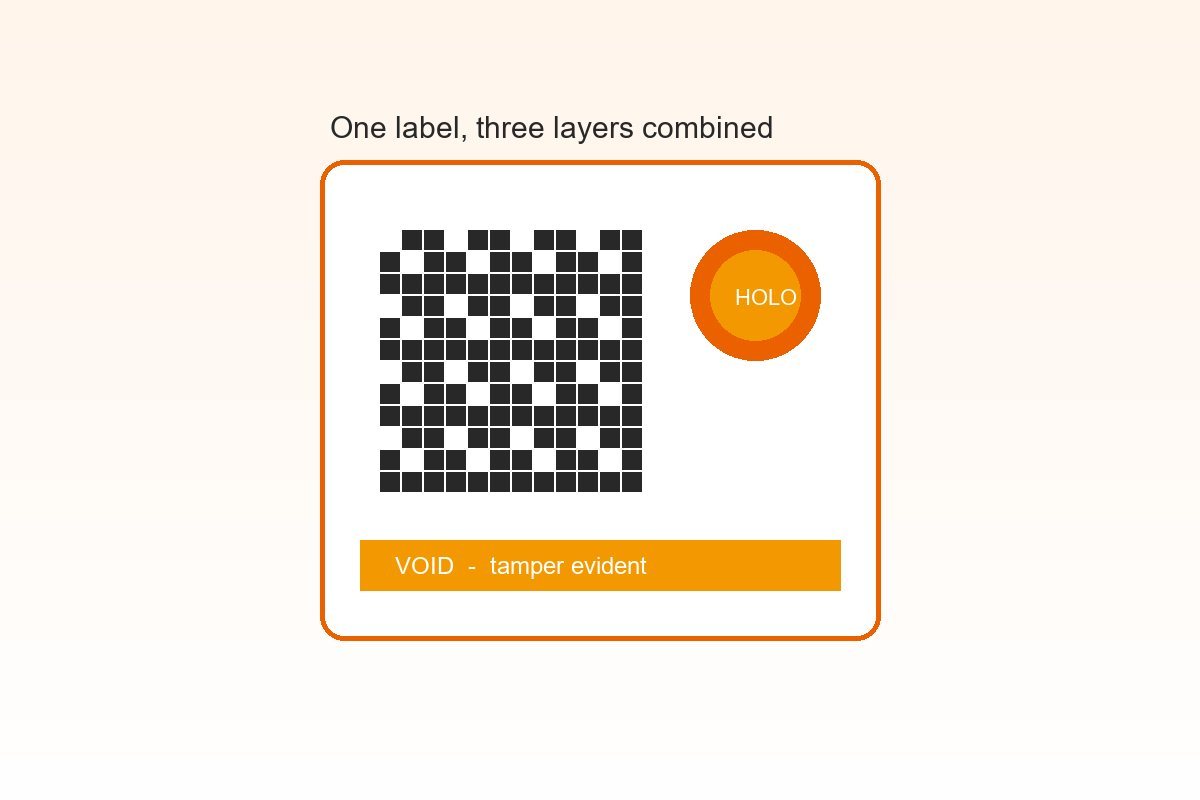
| Hologram sticker | Visible (Layer 1) | Covert UV mark + QR |
| VOID tamper-evident material | Visible (Layer 1) + Forensic (Layer 3) | Digital code on the seal |
Choosing a Stack by Risk
- High-value, high-counterfeit-risk (pharma, spirits, auto parts): all four layers, with forensic as the legal backstop.
- Mid-value consumer goods: visible hologram + covert UV + dynamic QR is the cost-effective sweet spot.
- Logistics and gray-market control: RFID/NFC digital layer plus VOID seals to catch diversion and tampering.
Frequently Asked Questions
Is more layers always better?
Not automatically. Each layer adds cost and a step at inspection. The right stack matches your counterfeit risk and unit value; most brands land on three well-chosen layers rather than all four on every item.
Does a QR code count as a full solution?
Only with server-side validation and, ideally, a cryptographic tag. A static QR that points to a fixed page proves little once copied. See our breakdown of common QR mistakes for the failure modes to avoid.
How does blockchain fit the model?
Blockchain is a trust anchor for the digital layer: it makes the authentication log append-only and tamper-evident. It strengthens Layer 4 but does not replace the physical layers. Our crypto-anchor guide covers the RFID-plus-chain setup.
Can I start with one layer and add later?
Yes, and it is common. Many programs begin with a visible hologram plus dynamic QR, then add covert and forensic layers as volumes and risks grow. Start where the gap is worst.
Putting It Together
Layered authentication is not a product you buy once; it is an architecture you design per product line. Start from the four layers, pick the ones your risk justifies, and make sure the digital layer is validated server-side rather than merely printed. For a step-by-step implementation plan, our QR implementation playbook is a practical starting point, and the Anti-Counterfeiting Technology hub collects the full series.
Ready to assess your stack? A short review of your product lines against these four layers usually shows one or two gaps worth closing first. Request a layered-authentication assessment and we will map the right combination for your risk and budget.