Tamper-Evident Packaging for Pharma & Cosmetics
Direct Answer: Tamper-Evident Packaging Is a Regulatory and Brand-Safety Requirement
For pharma and cosmetics, tamper-evident packaging is the physical layer that proves a unit was never opened, swapped, or refilled after it left a trusted facility. It pairs with serialization and unique identifiers to satisfy EU FMD and DSCSA obligations, and it protects consumers from contaminated or counterfeit product. A compliant design uses a visible "first-open" failure mode — a VOID pattern, a breakable ring, or a sealed membrane — so any breach is obvious to the eye. This guide covers what the rules require, which features fit, and a design checklist your packaging engineer can use.
Key takeaway: Tamper-evidence is not a sticker you add at the end. It is built into the closure and the seal, and it must fail visibly and permanently. In pharma it is a legal requirement; in cosmetics it is a fast-growing brand-trust expectation.
Why Pharma and Cosmetics Are High-Risk Targets
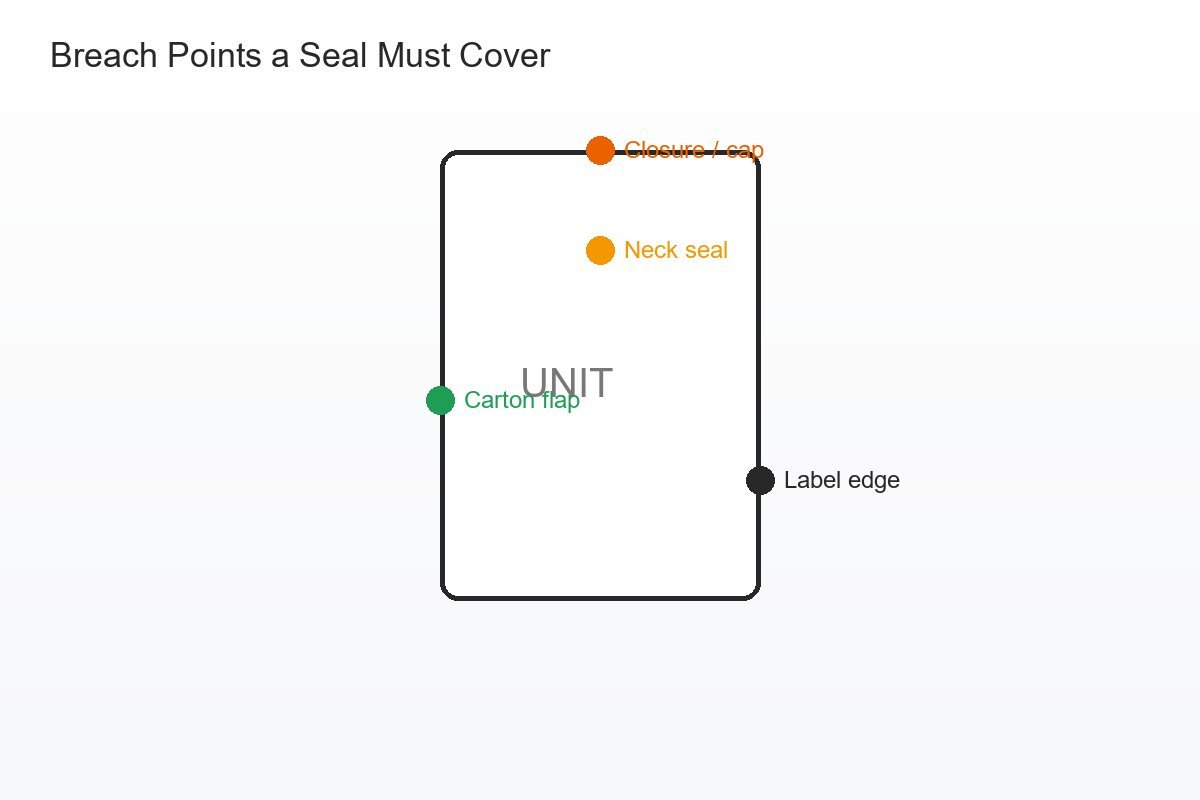
Both categories share traits that attract counterfeiting and adulteration: high per-unit value, trusted brand names, complex distribution, and products that are consumed or applied to the body. A fake medicine or a tampered serum is not a lost sale — it is a safety event. Regulators responded with binding packaging rules, and retailers now expect the same assurance for prestige beauty. The photo below shows the main breach points a tamper-evident design must cover.
What EU FMD and DSCSA Actually Require
Two regimes dominate the compliance conversation, and both put tamper-evidence next to unique identification:
- EU FMD (Falsified Medicines Directive): prescription medicine packs must carry a unique identifier — a 2D data matrix plus human-readable code (product, batch, expiry, serial) — and an anti-tampering device that shows if the pack has been opened.
- US DSCSA (Drug Supply Chain Security Act): each package needs a product identifier (2D barcode with NDC, serial number, lot, and expiry), verification of suspect product, and tamper-evident unit packaging as product moves through authorized trading partners.
The pattern is the same worldwide: a unique code answers "is this the real serial?", while a tamper-evident seal answers "was this unit physically opened?". They solve different questions, and you need both. Our layered authentication guide shows how the physical and digital answers combine.
Requirement Comparison
| Requirement | EU FMD | US DSCSA |
|---|---|---|
| Unique identifier | 2D data matrix + HR code per pack | Product identifier (2D barcode) per package |
| Anti-tampering device | Required on the pack | Tamper-evident unit packaging required |
| Verification | Scan at dispensing (national system) | Verify suspect product across partners |
| Primary goal | Block falsified medicines at pharmacy | Trace and secure the full supply chain |
Tamper-Evident Feature Types
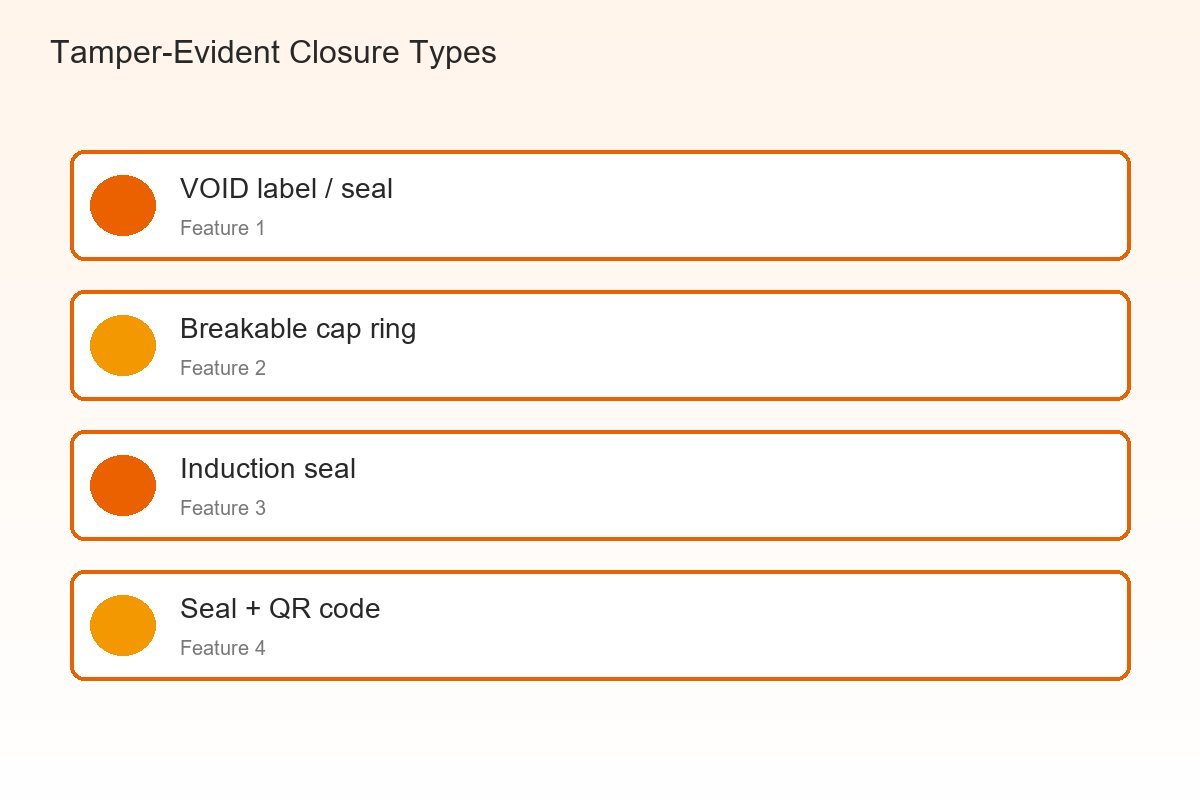
Choose the feature that matches the breach point and the opening habit of your pack:
- VOID labels and seals: a label that reveals a hidden "VOID" or custom message when lifted, proving the seal was broken. Ideal for cartons, bottles, and carton flaps.
- Breakable caps and rings: a closure that must fracture (a cap band or pilfer ring) before the product opens, so reassembly is visible.
- Induction seals (liner seals): a foil membrane heat-bonded to the container mouth — a clear "first-open" membrane that cannot be replaced cleanly.
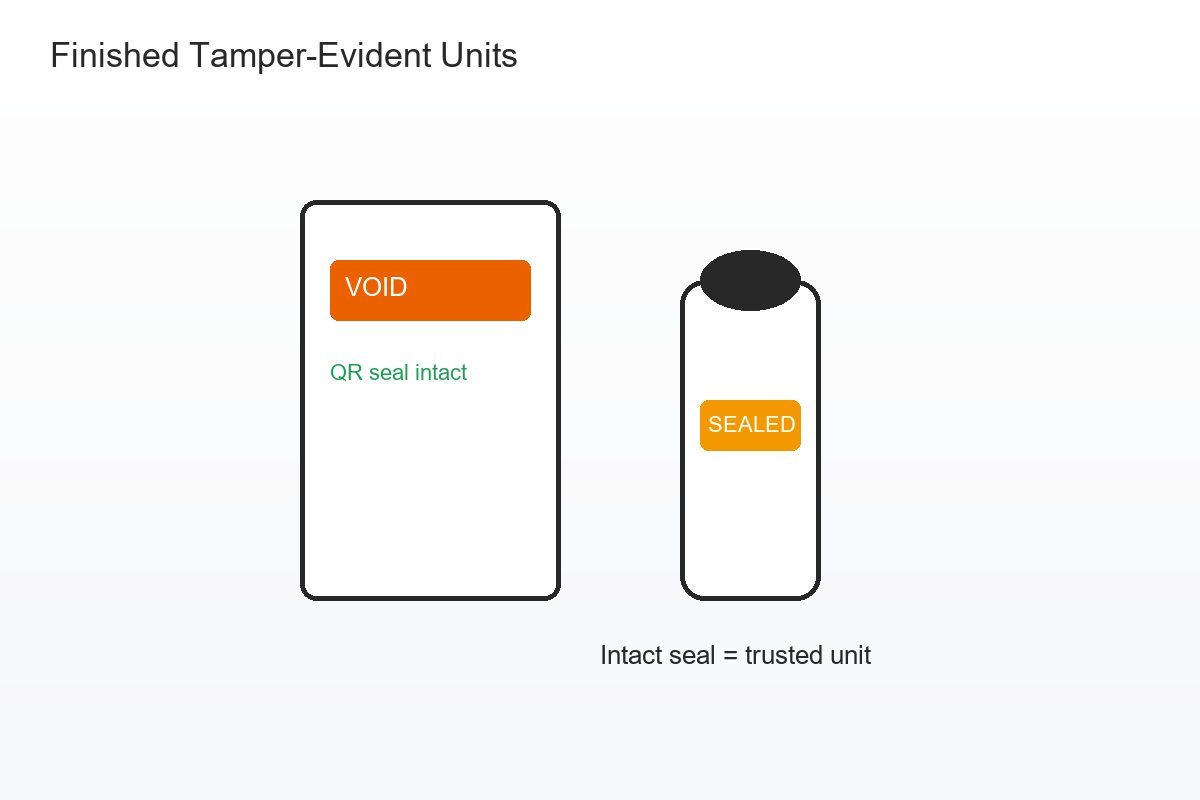
- Seal + code pairing: the seal or label carries a unique QR/NFC so a scan confirms both identity and that the seal is intact.
A Compliance Design Checklist
Use this list when briefing your packaging or label supplier. Each item maps to a regulatory or trust gap:
- Visible and permanent failure: the breach must be obvious and cannot be reversed without looking damaged.
- First-open only: a fresh seal, not a resealable one, for the unit the consumer receives.
- Code on the seal: pair the seal or label with a unique identifier so verification is complete.
- Material stability: the seal survives humidity, cold chain, and shelf handling without false failure.
- Brand-aligned artwork: the tamper element is part of the design, not a bolt-on afterthought.
Protect patients
An obvious breach stops a refilled or contaminated unit reaching a patient.
Meet the rules
EU FMD and DSCSA both tie tamper-evidence to the unique identifier.
Keep trust
Visible protection is now expected for prestige cosmetics, not optional.
How We Build Tamper-Evident Labels
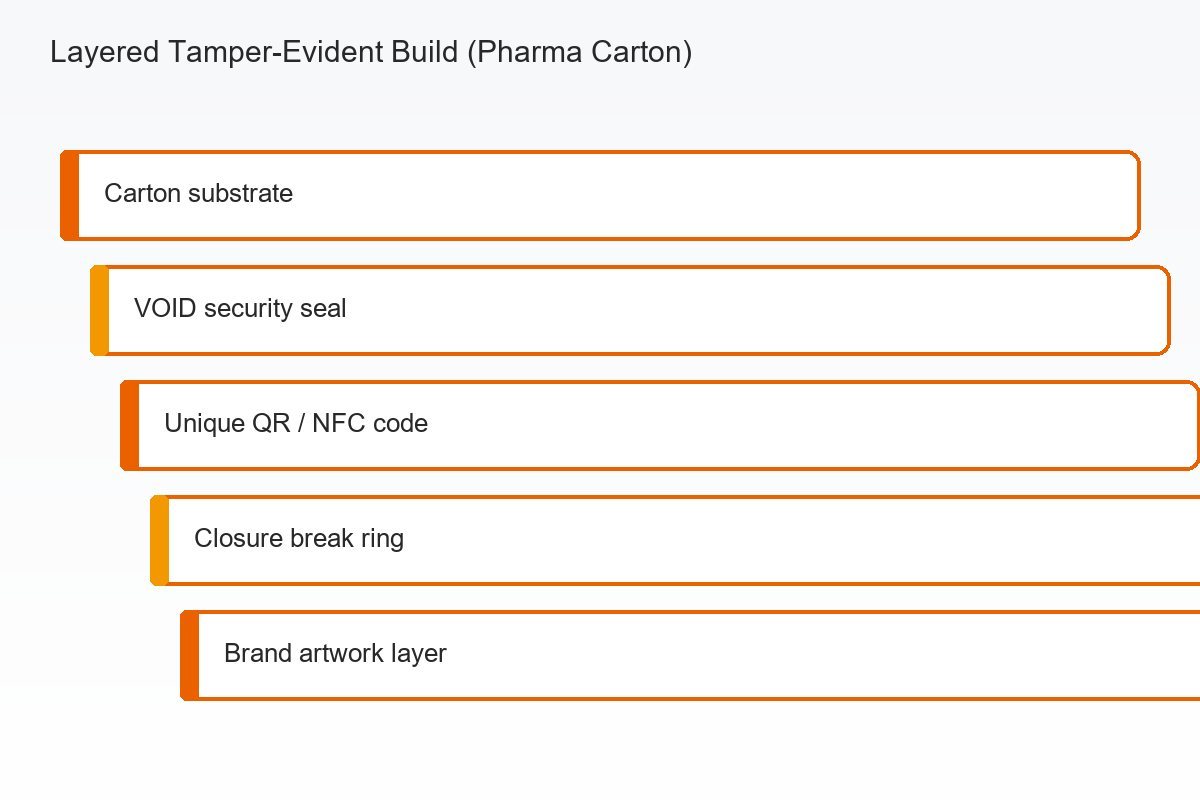
At QSDEFENDER we produce VOID and security seals on our own printing and converting line, which means the tamper pattern, the artwork, and the unique code are registered together and stay under one roof. A VOID message can be custom (your logo or a hidden text), and the same die-cut seal can carry a QR or NFC for paired verification. The schematic below shows a layered tamper-evident build for a pharma carton.
Frequently Asked Questions
Is tamper-evidence required for cosmetics?
In most markets it is not a hard legal mandate for cosmetics the way EU FMD is for medicine, but major retailers and prestige brands treat visible tamper protection as a baseline expectation, and it sharply reduces returns and counterfeits. Our hologram guide pairs well with a tamper seal for high-value beauty.
Does a barcode alone make a pack tamper-evident?
No. A barcode or QR answers identity and serial, not physical opening. Tamper-evidence is the seal or closure that fails visibly; the code is the digital companion that confirms the seal is the genuine one.
Can VOID and a unique code share one label?
Yes, and it is the recommended design. A single die-cut seal can carry the VOID pattern and a unique QR or NFC, so a scan confirms both "this is the real unit" and "the seal is intact". Our QR implementation playbook covers the code side in depth.
How do I brief a supplier?
Start from the checklist above: visible permanent failure, first-open only, code on the seal, stable material, and brand-aligned artwork. Give your supplier the breach points to cover (closure, neck, carton flap) and the regulation you must satisfy.
Putting It Together
Tamper-evident packaging for pharma and cosmetics is a design decision, not an add-on: pick the failure mode that matches your breach point, pair it with a unique identifier, and keep the artwork and the code under controlled production. That satisfies EU FMD and DSCSA intent and earns consumer trust at the same time. The full series lives in the Anti-Counterfeiting Technology hub, and our engineers can review your pack against this checklist.
Want a compliance review? Send us your pack's breach points and the regulation you must meet, and we will propose a tamper-evident seal and code pairing built on our own line. Request a tamper-evident design review.