Amazon Transparency Program QR Codes: The 2026 Seller Guide
If counterfeit or inaccurate versions of your product are shipping to Amazon customers, listing takedowns alone won't close the hole. Amazon's structural answer is Transparency: a unit-level serialization service — the engine behind the Amazon Transparency program — that requires a valid, unique code on every single unit before it can be listed or shipped in the marketplaces that support it. As of November 2026, Amazon reports more than 90,000 brands enrolled and 2.7 billion+ product units verified through the program.
This guide explains what an Amazon Transparency program QR code actually is, what eligibility and per-code costs look like in 2026, how the "bring your own codes" path works for brands that already serialize, where the program stops and your own authentication layer must take over, and a rollout sequence that avoids the operational traps that get brands' stock blocked.
1. What the Transparency Code Actually Does
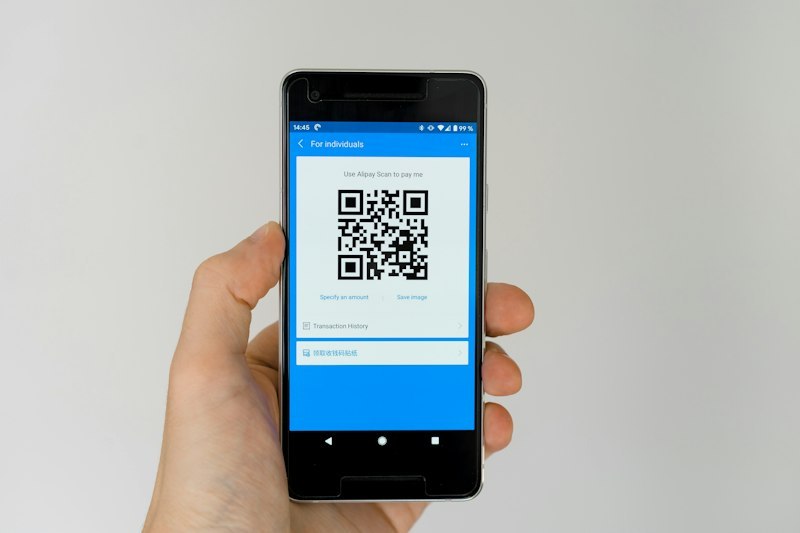
Every Amazon-issued Transparency code is a unique, alphanumeric, non-sequential code applied as a small square barcode on your packaging. Amazon owns the code-generation protocol and keeps a record of every code generated and the product it belongs to. Three protections follow from that registry:
- Unit-level authentication. A valid Transparency code must accompany every unit listed or shipped in Transparency-supported stores. Units that fail the check don't reach customers; Amazon investigates and notifies you.
- Listing blocking. Once your product is fully protected, other sellers cannot publish offers for it without valid codes that match your enrolled product — which structurally shuts down the counterfeit-listing route.
- Wrong-version filtering. Amazon's checks also block genuine products that differ materially in material, compatibility, color or language — the "authentic but wrong" problem that plain IP complaints rarely solve.
Consumer-side verification is app-based: for Amazon-issued codes, buyers scan with the Amazon Shopping app or the dedicated Transparency app and get a green check (valid) or red cross (invalid), plus any content you attach — images, videos, promotions.
Source: Amazon Selling Partner and Amazon Brand Protection official Transparency pages, retrieved November 2026.
2. Eligibility: The Three Gates
Per Amazon's official eligibility page, a brand must clear all three requirements before enrolling:
- Amazon Brand Registry — enrolled with a government-registered trademark, with you as the rights owner.
- A GTIN for each product — UPC, EAN, ISBN or equivalent. (This is the same identifier infrastructure that GS1 Digital Link builds on — see our GS1 Digital Link guide.)
- Ability to code every unit you manufacture — regardless of where the unit is sold, not only the units headed to Amazon.
Coverage is broad but not universal. Transparency protects products in 10 store countries: the US, Canada, Germany, France, Italy, Spain, the UK, Australia, India and Japan. Brands can enroll from the US, Canada, Germany, France, Italy, Spain, the UK, India, Japan and China; Amazon notes that Australia-based brands currently cannot enroll, though products from eligible origins still get protected in the Australia store. One enrollment covers all supported stores — you do not enroll per marketplace.
3. What the Amazon Transparency Program Costs in 2026
Enrollment is free, with no subscription and no minimums. You pay per code when you order — for both Amazon-issued codes and existing serial codes you connect to the program. Amazon's published tier pricing:
| Price per code | Codes generated (annual volume) |
|---|---|
| $0.05 | 1 to 1,000,000 |
| $0.03 | 1,000,001 to 10,000,000 |
| $0.01 | 10,000,001 and above |
Amazon Transparency pricing has no hidden parts: your annual code volume resets each year on your account creation date, and adding or removing products from the program costs nothing.
4. Five Ways to Apply Codes — Including Bring-Your-Own
Amazon supports several application methods; the choice mostly follows brand size and existing infrastructure:
- Self-print labels — small/medium brands wanting full control with no third-party dependency.
- Pre-printed labels from trusted partners — low-cost, fast, no equipment needed.
- Service providers and co-packers — outsourced labeling, packing and shipping.
- Print codes directly on packaging — enterprise route with the lowest per-unit cost but upfront investment.
- Bring your own codes — for brands already serializing: connect existing serial codes to Transparency with no packaging changes.
The bring-your-own path has specific technical requirements: each unit needs a unique serial number of 7–20 characters, carried in an externally scannable barcode (1D, QR or 2D), placed on the same side of the package as the GTIN. If you already print serialized QR labels — for example, the GS1-structured codes described in our Digital Link article — this is the route to evaluate; confirm format specifics with Amazon before committing a print run.
One trade-off to know upfront: consumer app verification only works with Amazon-issued codes. Amazon states the Transparency/Shopping app scan feature "isn't currently available if you integrate Transparency with your existing serial codes." Connecting your own codes gets you the listing and fulfillment protections, not the green-check consumer experience.
5. Activation: The Amazon Transparency Operational Performance Review
Protections do not switch on when you enroll. Amazon runs an operational review of your labeled stock first:
- FBA orders: initiate the review in the Transparency portal; your codes are scanned when units arrive at the fulfillment center.
- Seller-fulfilled orders: contact Transparency support to start the review and provide codes at order confirmation in Seller Central.
Only after passing the review are Transparency protections active. This is also where the operational traps bite — third-party implementation guides (SellerVine's 2026 brand-defense walkthrough among them) consistently flag the same failure modes:
- Labeling only the Amazon-bound units — Amazon-issued codes are required on every unit you make, wherever it ships.
- Placing labels where FBA prep or overwrap covers them — the code must be scannable on the packaging Amazon receives.
- Enrolling an ASIN before the factory can label every unit — unlabeled stock already in the pipeline can end up blocked or stranded.
6. Where Transparency Stops and Your Program Takes Over
Transparency is an Amazon-ecosystem control. It is excellent at what it covers, but brand protection doesn't end at Amazon's dock doors:
- Other channels aren't covered. Your own D2C store, regional distributors, retail shelves and gray-market channels need their own verification layer. Serialized QR labels with your own scan-verify service — plus channel monitoring that flags first-scan anomalies, the way we describe in our gray-market diversion guide — cover what Transparency can't see.
- Copyable codes stay copyable. Any printed code can be photocopied onto a counterfeit unit; the check is in the server-side serial lookup, and in pairing the code with a physical security feature. Our layered authentication guide covers how serialization, tamper evidence and covert features divide that labor.
- Serialization is the foundation, not the program. Whether the serial lives in Amazon's registry or your own verification service, the print-engineering requirements — scannability through the supply chain, code placement, GTIN co-location — are the ones we detail in our QR print specification guide.

7. A Rollout Sequence That Avoids the Traps
- Audit the gates (weeks 1–2). Confirm trademark status in Brand Registry, GTIN hygiene for every SKU, and whether your co-packer can apply codes to 100% of production.
- Pilot on hero ASINs. Start with the 3–5 products with the worst counterfeit exposure; prove the labeling workflow and pass the operational review before scaling.
- Fix placement for scanability. Agree label position with the packer so FBA prep never covers the code; verify scan rates on sealed, overwrapped units.
- Decide the consumer-experience question. If the green-check app experience matters to your customers, Amazon-issued codes are mandatory; if you already run serialized QR with your own verify page, weigh the bring-your-own path against re-printing.
- Extend beyond Amazon in parallel. The same serialization infrastructure should serve your D2C and retail channels — one serial system, multiple verification endpoints. Program-level structure lives in our 7-step brand protection framework, and category-specific playbooks for cosmetics and India pharma serialization show the same unit-level logic applied to regulatory regimes.
Honest Boundaries
- Program mechanics, pricing tiers, eligibility and store coverage above are from Amazon's official Transparency pages (retrieved November 2026); Amazon can change terms — confirm current terms during enrollment.
- The worked cost illustration is arithmetic on Amazon's published tiers, not a quote; label printing and application costs are brand-specific.
- Failure-mode commentary (labeling coverage, placement, review traps) draws on third-party implementation guides, including SellerVine's 2026 walkthrough — treat as practitioner experience, not Amazon policy.
- Transparency protects units in Amazon's ecosystem; it does not verify products sold through your own channels — that requires your own serialization and verification layer.
FAQ
Is Transparency the same as Project Zero?
No. Project Zero is a listing-level program (automated counterfeit removal and self-service takedowns); Transparency is unit-level serialization that blocks unauthenticated inventory before it ships. Third-party guides commonly recommend both together: Project Zero for speed on live listings, Transparency to close the inventory route.
Do I need codes on units sold outside Amazon?
Yes, if you use Amazon-issued codes — Amazon requires them on every unit you manufacture, regardless of destination. Brands that cannot commit to full-production serialization should consider the bring-your-own route or hold off until their labeling workflow is ready.
Can customers verify my product if I connect my own serial codes?
Per Amazon's current FAQ, no — consumer app scanning is available only for Amazon-issued codes. Connected own-code products still receive the listing and fulfillment protections.
What barcode format is the Transparency code?
Amazon-issued codes are unique alphanumeric strings rendered as a small square barcode on packaging. For own codes, Amazon accepts 1D, QR or 2D barcodes carrying a 7–20 character unique serial, placed on the same side as the GTIN.
Serializing for Amazon and your own channels?
QSDEFENDER manufactures serialized secure QR labels built for unit-level authentication — scannable through FBA handling, compatible with bring-your-own-code requirements, and backed by our own scan-verify service for D2C and retail channels. Talk to our team about a label spec for your production line, or benchmark your setup with the 2026 buyer's checklist.