Automotive Spare Parts Anti-Counterfeit Defense: From Plant to Fitting Bay
If you manufacture or distribute replacement components, automotive spare parts anti counterfeit defense is not a marketing upgrade — it is the difference between a part that proves itself at the fitting bay and a box that anyone with a printer can imitate. This guide walks through the scale of the fake-parts problem, the packaging and marking duties you already carry under UN Regulation No. 90 and the EU battery passport, how to match an identity layer to each part family, how to engineer a label that survives the engine bay, and a six-week rollout plan you can pilot on a single SKU.
Why fake parts hit the automotive supply chain harder
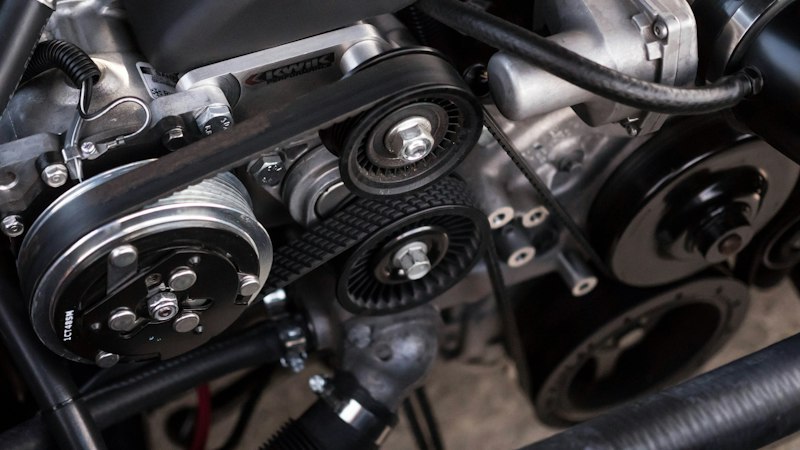
Counterfeiting touches every consumer category, but spare parts combine three conditions that make the damage unusually severe: the aftermarket is physically separated from the OEM production line, the catalogue runs to tens of thousands of SKUs, and the buyer at the counter often cannot tell a genuine filter or brake pad from a copy until it fails. A copied handbag disappoints; a copied brake pad can kill.
These figures come from different sources, years and methodologies, so treat them as an order-of-magnitude picture rather than one auditable number. What they agree on is direction: the illicit parts trade is large, safety-relevant and concentrated exactly where margins are thinnest for legitimate manufacturers.
Start from the regulation floor you already sit on
Many parts makers do not realize how much of an anti-counterfeit workflow they are already required to run. Two regulatory anchors matter most.
UN Regulation No. 90 for replacement brake parts
UN R90 governs replacement brake lining assemblies, drum-brake linings, discs and drums sold into UNECE markets. Three provisions map directly onto packaging and labeling decisions:
- Permanent approval marking (¶4.5). Every approved part must carry an indelible international approval mark — the E-in-circle plus the "90R-" approval number. Counterfeiters copy this printed mark; it is a static identifier, not a verifier.
- Sealed axle-set packaging (¶6.1–6.2). Replacement assemblies are marketed in axle sets, and each set must sit in a sealed package constructed to show previous opening — in other words, tamper evidence is already a legal duty for brake parts.
- Digital carriers explicitly allowed (¶6.3.4, ¶6.6, in force since 15 June 2024). The regulation now permits a QR code or weblink on the packaging for the approved-application list and for fitting instructions, provided the words "Full list of approved applications" or "Read instructions first" appear beside it and no personal data is required to access the content.
The strategic reading: because you must mark, date-batch and seal anyway, upgrading those mandatory elements into verifiable ones — a serialized secure QR instead of a static one, a VOID seal instead of an anonymous glue line — closes the copy gap at marginal cost.
The EU battery passport is coming
From 18 February 2027, electric-vehicle batteries, light-means-of-transport batteries and industrial batteries above 2 kWh placed on the EU market require an item-level digital battery passport linked to a QR data carrier, under Regulation (EU) 2023/1542. Commission guidance published in July 2026 structures the passport around 71 data points, from manufacturer identity to recycled-content shares. If your catalogue includes battery packs or EV components, the passport QR you must deploy anyway is the natural anchor for an authentication layer — and the Commission's published digital-product-passport roadmap points in the same direction for other automotive categories such as tyres later in the decade.
Match the identity layer to the part family
No single technology fits every SKU. The working principle is layering — one visual feature, one serialized digital feature, one tamper feature — as we argue in our layered authentication guide. Use this matrix to allocate budget:
| Layer | Best fit | Watch out for |
|---|---|---|
| Tamper-evident VOID / destructible seal | Sealed axle sets, filter and electronics cartons, oil and lubricant caps | Only protects the box — if the entire carton can be swapped, pair with an on-part mark |
| Serialized secure QR | Any boxed part; any smartphone can verify, no app needed | Static QR gets cloned at scale — the fix is server-side one-time scan semantics |
| Hologram / optical variable device | Brand-visible check on box and, where feasible, on the part | Alone it is copied on sight; combine with serialization |
| NFC (HF) | High-value single parts: ECUs, injectors, sensors, key fobs | Unit cost and per-item encoding effort |
| UHF RFID | Warehouse gates, pallet and axle-set logistics, fleet depots | Item-level economics; best above the single-unit tier |
If you are unsure which frequency fits your channel, our UHF vs HF vs NFC comparison breaks the trade-off down by scan distance and unit economics; the RFID & NFC buyer's guide covers chip and label selection in depth.
Engineer for the under-hood reality
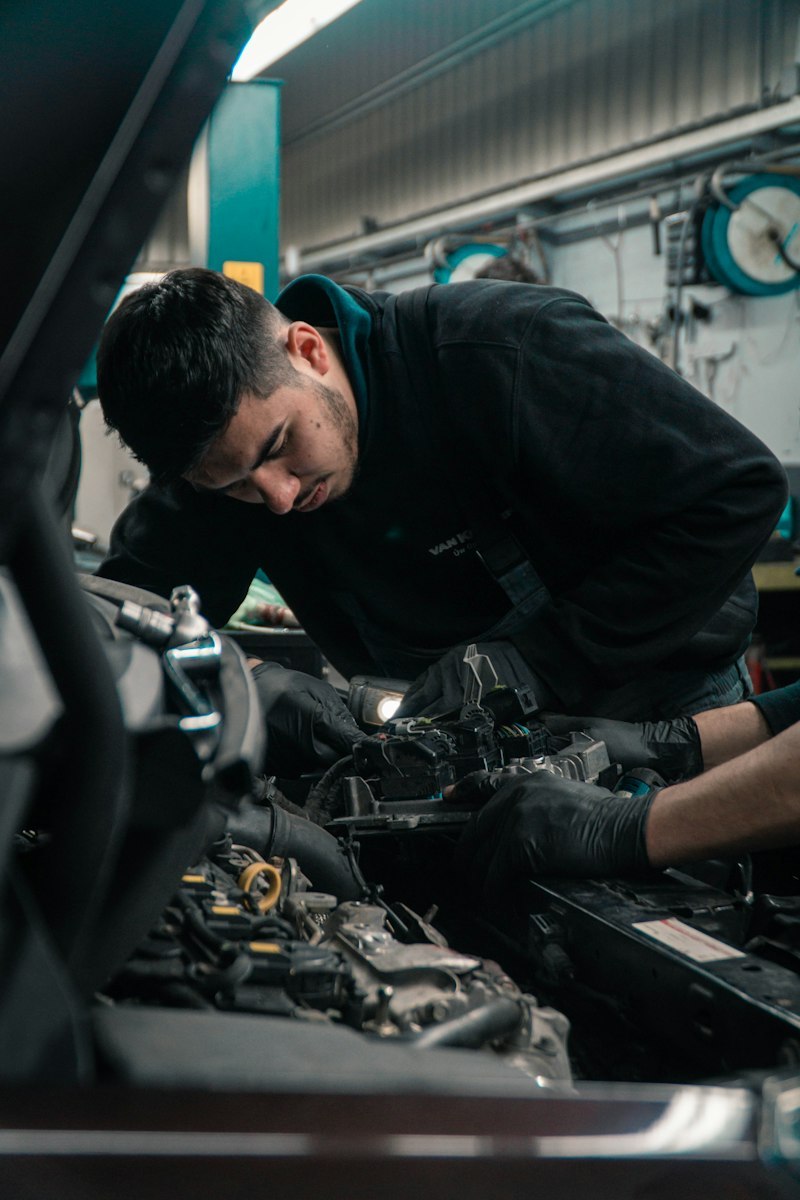
An automotive label is a component, not a sticker. The parts environment is one of the harshest any security label faces, so specify it like one:
- Temperature. Under-hood and near-brake locations cycle from deep-freeze transport to operating heat; select face stock, adhesive and laminate rated for the actual mounting location, not a generic "automotive grade".
- Fluids. Oil mist, brake fluid, coolant and washer-fluid splash attack both adhesive and print; ask your supplier for tested resistance, and demand test coupons before committing a run.
- Substrate. Textured, powder-coated or lightly oiled surfaces change adhesion behavior; surface-energy testing on real parts beats datasheet assumptions.
- Abrasion. Boxes tumble in mixed pallets and parts vibrate for a decade; over-lamination protects QR modules and holograms from scuff-through.
- Print quality. R90 requires the approval mark to be clearly legible and indelible — your security label must meet the same bar. Module size, quiet zones and contrast for the expected scan distance follow the same rules we detail in the QR print specification guide.
Label the box and, for high-value SKUs, the part itself: the carton protects the logistics chain, the on-part mark survives the box being opened and discarded at the counter.
Close the loop with server-side verification
A label that only looks secure moves the problem; it does not solve it. The verification chain is what converts packaging spend into enforcement capability:
- Server-side verdicts. Every scan resolves against your database, so a code that was cloned and reprinted elsewhere shows a wrong location, a duplicate event or an invalid signature — the mechanism behind cryptographic carriers such as NTAG 424 DNA.
- Channel checkpoints. Four fixed scan points — plant dispatch, distributor receipt, workshop fitting, warranty registration — turn scans into a channel map. Out-of-territory first scans are your earliest gray-market signal, as described in our gray-market diversion analysis.
- Alerts and evidence packs. Duplicate-scan and wrong-location alerts route to your channel team with timestamps, geography and scan history — the raw material for marketplace takedowns and customs filings.
- Warranty protection. Registration at fitting ties a serial to a vehicle, which shrinks warranty fraud on genuine parts and gives workshops a reason to scan.
A six-week rollout, not a moonshot
- Week 1 — rank exposure. Score SKUs on safety criticality, price gap versus fakes, channel complaints and seizure history. Brake, steering, airbag and electronics families go first.
- Week 2 — audit the compliance floor. Confirm approval marks, batch/date coding and the sealed-package duty under R90 are actually applied on every line; fix the basics before layering security.
- Weeks 3–4 — pilot one SKU family. Secure QR on the carton plus a VOID seal, one plant, one market. Define the verdict logic and alert rules before the first label prints.
- Week 5 — train the channel. Distributors and workshops scan on receipt and at fitting; give them a two-minute reason to care: guaranteed genuine stock and faster warranty handling.
- Week 6 — read the baseline. First-scan locations, duplicate-scan rate, alert count and scan geography become your quarter-over-quarter KPIs.
- Then — extend. Roll to adjacent families, add UHF at warehouse gates for top SKUs, and fold results into the program-level framework in our 7-step brand protection program.
Six weeks is enough to know whether an automotive spare parts anti counterfeit program is working in your channel: the scan baseline after a single quarter tells you where gray flow enters and which SKUs deserve the next layer.
Honest limits of what labels prove
Three boundaries keep expectations real. First, a label proves the identity of the item carrying it, not the engineering quality of what is inside — quality still lives in your type approvals and quality system. Second, no label is unclonable: static marks are copied on sight, and even serialized codes can mislead a single consumer before a server-side verdict flags the clone; one-time scan semantics shrink that window, they do not close it to zero. Third, the market figures above differ by source and year — we cite each origin so your procurement team can weigh them, and we publish no client case numbers.
Frequently asked questions
Do UN R90 rules require an anti-counterfeit label?
No. R90 requires permanent approval marks, batch/date coding and a sealed package that shows previous opening — but it does not mandate a security label. The economics still favor adding one: the marking and sealing workflow you must run anyway becomes verifiable when the marks are serialized and the seal reveals tampering.
QR or NFC for spare parts — which should we deploy?
Use serialized QR for scale across the catalogue because any smartphone verifies it, NFC for high-value single parts where per-unit encoding cost is justified, and UHF RFID where gate-level logistics visibility matters more than item-level checks. Most programs run two layers, not one.
Will a hologram alone stop counterfeiters?
Not by itself. A visible hologram deters casual copying and gives counter staff a fast visual check, but determined counterfeiters replicate or source generic foils. The durable combination is hologram plus serialization plus server-side verification.
Sources and further reading
- OECD/EUIPO, Mapping Global Trade in Fakes 2025 (2021 data): USD 467 billion, 2.3% of world imports; automotive spare parts among affected sectors — oecd.org.
- UNECE, UN Regulation No. 90, Rev.2 Amd.2, Supplement 12 (in force 15 June 2024): approval marking ¶4.5, axle sets and sealed packaging ¶6.1–6.2, digital carriers ¶6.3.4/6.6 — unece.org.
- Regulation (EU) 2023/1542 on batteries, Annex XIII (battery passport from 18 February 2027); European Commission, Digital Battery Passport data-point guidance, July 2026.
- Detroit Free Press, 1 April 2026: US inbound counterfeit auto parts valued at more than USD 3 billion per year; Automotive Anti-Counterfeiting Council (A2C2) part-category observations.
- ACMA and FICCI-linked estimates for India's aftermarket, as reported by Autocar Professional and industry publications; figures vary by segment and year.
Protect your part number before someone else sells it
QSDEFENDER manufactures tamper-evident seals, serialized secure QR labels, 3D/4D hologram stickers and security tape for automotive spare parts anti counterfeit programs — with under-hood-grade material options and server-side verification built in.
Request an automotive spare-parts label consultation